
Mops

Filters Clear All
Brands
Price
Application
Handle Color
Handle Length
Handle Material
Handle Material(s)
Mop Head Color
Mop Head Material
Mop Head Size


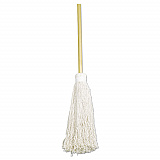
1-2 Day Delivery
$27.71 $47.66
Choose Your Frequency:
Volume Pricing
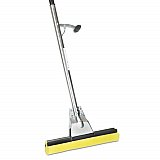
1-2 Day Delivery
$46.12 $57.10
Choose Your Frequency:
Volume Pricing
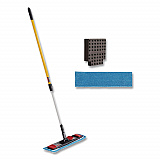
1-2 Day Delivery
$67.47 This item is listed at the minimum advertised price.
Choose Your Frequency:
Volume Pricing
1-2 Day Delivery
$104.65 $186.52
Case of 5($20.93/Each)
Choose Your Frequency:
Volume Pricing
1-2 Day Delivery
$92.17 This item is listed at the minimum advertised price.
Choose Your Frequency:
Volume Pricing
1-2 Day Delivery
$76.60
Choose Your Frequency:
Volume Pricing
1-2 Day Delivery
$33.88 $59.41
($33.88/Kit)
Choose Your Frequency:
Volume Pricing
1-2 Day Delivery
$26.17 $42.29
Choose Your Frequency:
Volume Pricing
Scheduled Freight Delivery
$197.71 $321.65
Choose Your Frequency:
Volume Pricing
1-2 Day Delivery
$187.91 $321.64
Choose Your Frequency:
Volume Pricing
1-2 Day Delivery
$53.46 $94.19
Choose Your Frequency:
Volume Pricing
1-2 Day Delivery
$18.32 $31.53
Choose Your Frequency:
Volume Pricing
1-2 Day Delivery
$53.87 $94.59
Case of 3($17.96/Each)
Choose Your Frequency:
Volume Pricing
1-2 Day Delivery
$21.16 $36.04
Choose Your Frequency:
Volume Pricing
1-2 Day Delivery
$30.90 $40.19
Choose Your Frequency:
Volume Pricing
1-2 Day Delivery
$33.14 $59.68
($33.14/Kit)
Choose Your Frequency:
Volume Pricing
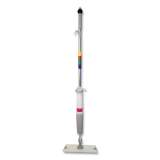

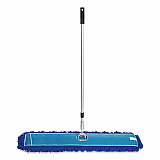

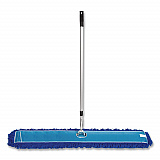


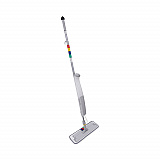
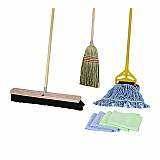
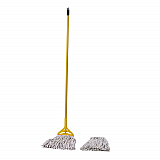
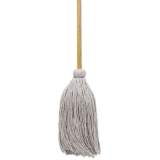
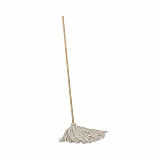
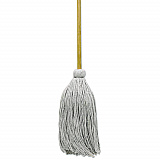
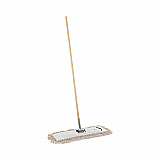
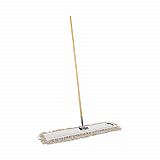
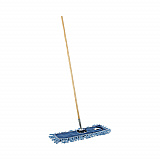
Commercial mops for faster, cleaner floor care
Mops are one of the highest-use tools in any cleaning program, and the wrong choice shows up quickly in labor time, finish quality, and replacement costs. This category is built for buyers who need dependable performance across offices, schools, restaurants, healthcare, and industrial spaces - with bulk-friendly ordering, consistent availability, and fast 1-2 day shipping.
Whether you are maintaining tile, sealed concrete, LVT, or finished wood, the best results come from matching the mop type to the soil load, chemical program, and your change-out frequency. Stocking the right mop inventory also reduces cross-contamination risk and helps standardize training across shifts.
How to choose the right mop for your facility
Match the mop style to the job
Different mop constructions handle different soils and floor finishes. Use these quick decision points to narrow options:
- General wet mopping: Choose absorbent, durable options for routine cleaning and spill pickup.
- Finish-safe cleaning: Use smooth-glide microfiber styles to reduce streaking and improve pickup on sealed floors.
- High soil areas: Look for heavier-duty fibers and constructions that release soil effectively during rinsing.
- Dust control: For dry debris and daily maintenance, pair wet mops with dedicated dust tools to reduce rework.
Consider floor type and chemical compatibility
Floor finish and chemistry matter. Microfiber can improve cleaning efficiency with less chemical, while traditional fibers may be preferred for heavy spill absorption. If you use disinfectants or peroxide-based cleaners, confirm the mop material is compatible and can be laundered or replaced at your required interval.
Plan for change-outs, laundering, and color coding
Procurement teams often overlook lifecycle costs. A mop that lasts longer, rinses cleaner, or launders well can reduce total spend even if the unit price is slightly higher. If you run color-coded programs (restrooms vs kitchens vs patient areas), standardize colors and keep par levels on hand to avoid substitutions that create compliance risk.
Build a complete mop setup (and reduce downtime)
Pair mops with the right wringing and transport
A mop is only as effective as the system around it. For controlled moisture and faster drying times, match your mop to the right bucket capacity and wringer style. If you are replacing worn-out stations or setting up new routes, add Buckets & Wringers to keep crews moving without over-wetting floors.
Keep replacement components in stock
Many facilities reduce downtime by keeping spares ready for quick swaps. If you already have frames and just need refills, shop Mop Heads to standardize performance across locations. If your handles are bent, loose, or mismatched, add Mop Handles to keep compatibility consistent and reduce on-the-fly workarounds.
Round out your floor cleaning toolkit
For full coverage beyond wet mopping, consider complementary tools that handle corners, entryways, and dry debris. Add Brooms for quick pickup before mopping, or use Squeegees in kitchens and washdown areas where pushing water to drains is faster than absorption. For tight spaces and baseboards, Brushes can help with detail cleaning where mops cannot reach.
What to expect from our mop assortment
Commercial brands and consistent supply
Choose from trusted commercial lines including Boardwalk, Swiffer, Rubbermaid Commercial, 3M, Bona, Unger, Diversey, Nexstep Commercial Products, and O-Cedar. With over 100 SKUs, you can spec the right mop for each area of your facility instead of forcing one tool to do every job.
Bulk ordering that supports recurring purchasing
Mops are a recurring-use item in most facilities. Ordering in bulk helps lock in price advantage, reduce emergency orders, and keep crews equipped during peak demand. If you manage multiple sites, standardizing SKUs simplifies training, storage, and reordering.
Fast shipping and knowledgeable support
When a cleaning tool fails, the cost is labor and downtime. Our 1-2 day shipping helps you recover quickly, and our customer support can help confirm fit, use case, and compatibility so you order with confidence.
Mops FAQ
Do I need a specific mop handle or will any handle fit?
Not all handles are universal. Connection style and thread type vary, so confirm compatibility before ordering. If you are standardizing across a facility, keeping the same handle style reduces replacement issues.
How often should mops be replaced in a facility?
Replace based on performance and hygiene requirements: when fibers are frayed, odor persists after laundering, or the mop no longer releases soil effectively. High-traffic areas and strict compliance environments typically require more frequent change-outs.
Should I buy mops in bulk for a multi-site operation?
Yes. Bulk purchasing helps maintain par levels, reduces rush freight risk, and supports consistent cleaning results across sites. It also simplifies reordering by standardizing SKUs.
What else should I buy with mops to improve productivity?
Most teams pair mops with a bucket and wringer for moisture control, plus spare mop heads for quick swaps. Complementary tools like brooms or squeegees can reduce prep time and speed up cleanup in specific areas.
Which mop type is best for commercial floor cleaning?
It depends on your floor and soil load. Microfiber is often preferred for finish-safe cleaning and strong pickup, while more absorbent fibers can be better for heavy spills. Match the mop to your chemical program and change-out frequency.