
Graffiti & Gum Removers

Filters Clear All
Price
Application
Chemical Compound
Dirt Types
Packing Type
Physical Form
Product Packaging
Scent
Volume Capacity

1-2 Day Delivery
$81.31 $155.94
Case of 6($13.55/Each)
Choose Your Frequency:
Volume Pricing Price/Pack
-
3+$79.28
1-2 Day Delivery
$165.12 Great news! The price of this item drops at checkout, but we can't show it here due to manufacturer restrictions. Add it to your cart to see your exclusive deal!
Case of 12
Choose Your Frequency:
Volume Pricing
1-2 Day Delivery
$16.62 $22.72
Box of 10($1.66/Each)
Choose Your Frequency:
Volume Pricing Price/Pack
-
5+$16.20
1-2 Day Delivery
$80.26 $130.02
Case of 6($13.38/Each)
Choose Your Frequency:
Volume Pricing Price/Pack
-
3 - 15$78.25
-
16 - 37$74.91
-
38+$73.57
1-2 Day Delivery
$4.80 $9.41
Choose Your Frequency:
Volume Pricing Price/Pack
-
5 - 124$4.68
-
125+$4.48
1-2 Day Delivery
$50.22 $112.92
Case of 12($4.19/Each)
Choose Your Frequency:
Volume Pricing Price/Pack
-
3+$48.96
1-2 Day Delivery
$5.35 $8.37
Choose Your Frequency:
Volume Pricing Price/Pack
-
5 - 115$5.22
-
116+$5.00
1-2 Day Delivery
$63.36 $100.44
Case of 12($5.28/Each)
Choose Your Frequency:
Volume Pricing Price/Pack
-
3 - 18$61.78
-
19+$59.14
1-2 Day Delivery
$43.39 $73.33
Choose Your Frequency:
Volume Pricing Price/Pack
-
3 - 23$42.31
-
24 - 69$40.50
-
70+$39.78
1-2 Day Delivery
$170.88 $293.32
Case of 4($42.72/Each)
Choose Your Frequency:
Volume Pricing Price/Pack
-
2 - 8$166.61
-
9 - 17$159.49
-
18+$156.64
1-2 Day Delivery
$9.78 $16.60
Choose Your Frequency:
Volume Pricing Price/Pack
-
5+$9.54
1-2 Day Delivery
$38.34 $66.40
Case of 4($9.59/Each)
Choose Your Frequency:
Volume Pricing Price/Pack
-
3+$37.38
1-2 Day Delivery
$7.33 $14.78
Choose Your Frequency:
Volume Pricing Price/Pack
-
5 - 93$7.15
-
94 - 409$6.84
-
410+$6.72
1-2 Day Delivery
$49.54 $88.68
Case of 6($8.26/Each)
Choose Your Frequency:
Volume Pricing Price/Pack
-
3 - 21$48.30
-
22 - 60$46.23
-
61+$45.41
1-2 Day Delivery
$61.07 $125.40
Case of 6($10.18/Each)
Choose Your Frequency:
Volume Pricing Price/Pack
-
3+$59.54
1-2 Day Delivery
$88.51 $156.78
Case of 6($14.75/Each)
Choose Your Frequency:
Volume Pricing Price/Pack
-
3 - 14$86.30
-
15+$82.61
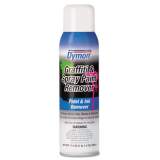
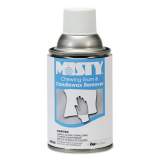
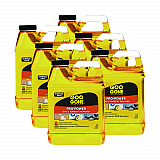
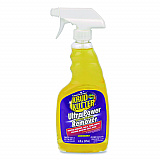
Graffiti and gum removers for commercial cleanup
Graffiti and chewing gum are high-visibility problems that can turn into repeat labor costs if the chemistry is wrong. This category is built for facilities, schools, restaurants, retail, property management, and cleaning teams that need predictable results across multiple surfaces. With 100+ SKUs, you can standardize on the right remover for your substrates, your dwell-time expectations, and your safety requirements.
Choose from trusted professional brands like Goo Gone, Motsenbockers Lift Off, Boardwalk, Diversey, Betco, DYMO, Dymon, Krud Kutter, and Misty. Order singles for testing or case quantities to keep crews stocked and reduce emergency runs.
What these products remove (and where they work best)
Graffiti: inks, paint, markers, and overspray
Graffiti removers are formulated to break down common tag materials like spray paint, permanent marker, and ink. Many are designed to cling to vertical surfaces to increase dwell time, which helps reduce scrubbing and surface damage. Typical use areas include:
- Painted masonry, brick, and concrete
- Metal doors, roll-up shutters, and signage
- Restroom partitions and plastic panels
- Transit areas, loading docks, and exterior walls
For sensitive finishes, start with the least aggressive option and test in an inconspicuous area. The goal is removal without etching, dulling, or lifting the underlying coating.
Gum: sidewalks, entry mats, tile, and carpet
Gum removers typically work by freezing, dissolving, or loosening the gum so it can be lifted with minimal residue. This is especially important in high-traffic zones where slip risk and appearance matter. Common applications include:
- Concrete and textured floors at entrances
- VCT, tile, and sealed hard floors
- Carpeted areas and rugs (spot treatment)
- Under tables, counters, and seating areas
For hard floors, pair the right chemistry with a scraper or putty knife and follow with a neutral rinse when required by the label.
How to choose the right remover
1) Match chemistry to the surface
Surface compatibility is the fastest way to avoid rework. Painted surfaces, plastics, and laminates can react differently than bare concrete or metal. If you maintain multiple building types, it can be worth stocking two tiers: a general-use remover for routine calls and a stronger option for heavy paint layers or older tags.
2) Consider dwell time, viscosity, and application method
Vertical walls and doors often benefit from gel or clinging formulas that stay wet longer. For large areas, look for products that can be applied with trigger sprayers, pump sprayers, or wipes for controlled application. Faster dwell time can reduce labor, but only if it is safe for the substrate.
3) Control odor and indoor-use constraints
For occupied spaces like schools, healthcare, and retail, odor and ventilation matter. Review the SDS and label directions for indoor use, PPE, and required air exchange. If you need daily-use cleaning support beyond spot removal, consider pairing your program with All Purpose Cleaners & Degreasers for routine soil and film removal before and after graffiti treatment.
4) Plan for follow-up cleaning and floor care
After removal, residues can attract dirt or interfere with coatings. If your process includes restoring shine or protection, coordinate with your floor program. Many teams keep Floor Cleaners on hand for post-treatment cleanup and use Floor Finishes when the goal is to re-protect high-traffic areas after aggressive spot work.
Best practices for faster, safer removal
Test first and document what works
Standardize your approach by testing on each common surface type and recording the product, dwell time, agitation method, and rinse requirements. This reduces callbacks and helps new staff follow a proven process.
Use the right tools to reduce damage
- Soft brushes or non-scratch pads for painted and polished surfaces
- Plastic scrapers for gum on hard floors
- Absorbent towels for controlled wipe-off and reduced spread
Over-agitation can create ghosting or burnishing, especially on coated surfaces.
Follow label directions for rinsing and disposal
Some removers require rinsing or neutralizing to prevent residue and surface haze. Always follow label instructions and local disposal requirements, especially when removing paint pigments or heavy soils.
Why buyers stock up here
Lower total cost per job
Bulk purchasing reduces per-use cost and helps avoid downtime when a high-visibility incident happens. Case quantities also make it easier to standardize across multiple sites.
Fast fulfillment and real support
When you need product quickly, 1-2 day shipping helps keep schedules intact. If you are unsure which formula fits your surface or soil type, knowledgeable support can help you narrow options and avoid trial-and-error spending.
Assortment depth for real-world conditions
With a wide selection across leading brands, you can choose the right format (spray, gel, liquid, wipes) and strength level for your environment, from light marker removal to heavy paint layers and stubborn gum.
Graffiti & Gum Removers FAQ
Can I use an all-purpose degreaser instead of a graffiti remover?
Degreasers can help with general grime and some residues, but they are not always effective on spray paint, marker inks, or heavy adhesive binders. For faster removal and fewer repeat passes, use a dedicated graffiti remover matched to the surface.
Do gum removers work on both concrete and carpet?
Many gum removers are designed for hard surfaces like concrete and tile, while others are formulated for carpet spot treatment. Check the label for surface approvals and always test first, especially on carpet dyes and backing.
How much should I buy for a multi-site facility or janitorial team?
For recurring issues, case quantities are typically more cost-effective and reduce stockouts. A practical approach is to keep a general-use remover at each site plus a stronger specialty option for heavy incidents, then reorder based on monthly usage trends.
Should I rinse after using a graffiti or gum remover?
Often, yes. Some formulas leave residue that can attract soil or interfere with floor finishes. Follow the product label for rinse, neutralization, or wipe-off steps and allow the area to dry before reopening to traffic.
What is the best way to remove graffiti without damaging paint or plastic?
Start with the least aggressive graffiti remover that is labeled compatible with the surface, test in an inconspicuous area, and follow the recommended dwell time. Use a soft brush or non-scratch pad and rinse or wipe clean per the label to prevent haze or residue.