
Measuring Cups & Spoons

Filters Clear All
Price
Capacity (Volume)
Color Family
Cup Type
Interior Volume Capacity
Material Type
Material(s)
1-2 Day Delivery
$29.60 $45.57
Choose Your Frequency:
Volume Pricing
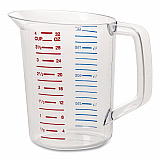
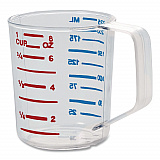
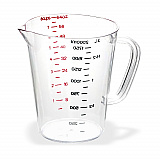
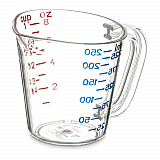
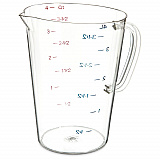
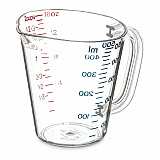
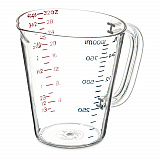
Measuring Cups & Spoons for consistent portions and repeatable results
In a commercial kitchen, small measurement errors turn into big waste. Measuring cups and spoons help standardize recipes, reduce over-portioning, and support training across shifts. Choose sets that are easy to read, easy to sanitize, and tough enough for daily use.
This category includes portion-focused tools from trusted commercial lines like Carlisle and Rubbermaid Commercial. With 100+ SKUs available, its easy to match your operation, from prep stations to bakery production.
Choose the right measuring cups for your kitchen
Start with how your team measures most often:
- Dry measuring cups: Best for flour, sugar, grains, and portioned ingredients. Look for rigid cups with flat tops for leveling.
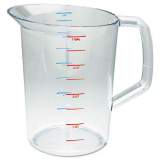
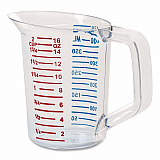
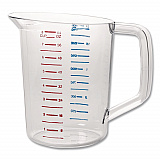
- Liquid measuring cups: Ideal for water, oils, sauces, and batters. Prioritize clear graduations and a stable base to reduce spills.
- Graduated measuring cups: Useful for quick multi-volume measuring at the line or in prep.
For high-volume kitchens, consider ordering multiple sets per station. Keeping a dedicated set at each prep area reduces downtime and helps prevent cross-contact.
Measuring spoons that hold up to daily service
Measuring spoons are often the most abused tools in a drawer. For better longevity and accuracy, look for:
- Clearly marked sizes that do not wear off with washing.
- One-piece or reinforced construction to avoid handle separation.
- Round vs. narrow spoon bowls depending on whether you frequently measure from spice jars or bulk bins.
If your team works fast, choose sets with easy-to-grab rings or storage options that keep sizes together and reduce loss.
Materials, markings, and sanitation considerations
Commercial buyers typically prioritize durability and wash performance over aesthetics. Common options include:
- Stainless steel: Strong, heat resistant, and long wearing. A solid choice for dishroom-heavy operations.
- Polycarbonate and other durable plastics: Lightweight and impact resistant. Often preferred for color coding and quick handling.
Look for easy-to-read graduations, especially on liquid measures. Etched or molded markings generally last longer than printed graphics. If you run a HACCP plan or allergen controls, color-coded sets can support separation by station or ingredient type.
Accuracy and portion control: what to standardize
Consistency is the real ROI. Standardize measuring tools across locations and shifts so recipes do not drift. For best results:
- Use the same cup style for the same task (dry vs. liquid).
- Replace worn or cracked tools that can throw off volume.
- Keep backup sets on hand to avoid substitutions during rush periods.
Buying in bulk is usually the most cost-effective way to keep every station equipped, especially for multi-unit operations and commissaries.
How this category fits your prep workflow
Measuring tools work best when paired with the right prep equipment. If you are outfitting a full station, compare adjacent options in Cooking & Serving Utensils for mixing, stirring, and plating tools that complement portioning tasks. For ingredient prep and assembly, Cutting Boards help create a cleaner, more organized workflow alongside your measuring sets. And if your team portions by volume from bins or bulk containers, Scoops can be a faster alternative for consistent servings.
Why buyers stock up here
- Price advantage on commercial-grade tools built for repeat use.
- Fast fulfillment with 1-2 day shipping on many items.
- Selection depth across sizes, materials, and set configurations.
- Knowledgeable support to help match tools to your kitchen and compliance needs.
Need help choosing between stainless vs. plastic, or deciding how many sets to order per station? Our team can help you standardize the right tools so your kitchen stays consistent and service stays smooth.
Measuring Cups & Spoons FAQ
Are stainless steel measuring cups and spoons better for commercial kitchens?
Stainless steel is typically more durable, heat resistant, and long wearing in high-use dishroom environments. Heavy-duty plastics can be a good fit when you want lighter weight tools or color coding by station.
Can measuring tools support portion control and food cost management?
Yes. Standardized measuring cups and spoons reduce over-portioning, improve recipe repeatability, and make training easier across shifts, which helps control food costs.
Do measuring cup markings wear off in the dishwasher?
Printed markings can fade over time with frequent washing. Etched (stainless) or molded (plastic) graduations generally last longer and are preferred for high-volume use.
How many measuring cup and spoon sets should I buy for a restaurant?
A common approach is at least one full set per prep station plus 1-2 backup sets for peak periods and dishroom cycles. Multi-unit operations often standardize the same set across locations to keep recipes consistent.
What is the difference between dry and liquid measuring cups?
Dry measuring cups are designed to be filled and leveled for ingredients like flour or sugar. Liquid measuring cups have a spout and headspace so you can measure fluids accurately at eye level without spilling.