
Floor Cleaners

Filters Clear All
Brands
Price
Applicable Material
Application
Capacity (Volume)
Capacity (Weight)
Chemical Compound
Compatible With
Dirt Types
Packing Type
Physical Form
Product Packaging
Scent
Volume Capacity




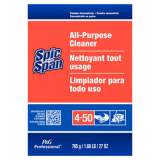
1-2 Day Delivery
$12.62 $21.50
Choose Your Frequency:
Volume Pricing
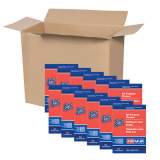
1-2 Day Delivery
$145.69 $258.00
Case of 12($12.14/Each)
Choose Your Frequency:
Volume Pricing
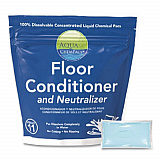
1-2 Day Delivery
$90.96 $128.75
($90.96/Pack)
Choose Your Frequency:
Volume Pricing
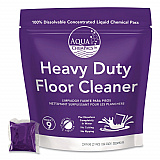
1-2 Day Delivery
$95.06 $134.55
Pack of 100
Choose Your Frequency:
Volume Pricing
1-2 Day Delivery
$189.60 Great news! The price of this item drops at checkout, but we can't show it here due to manufacturer restrictions. Add it to your cart to see your exclusive deal!
Case of 4
Choose Your Frequency:
Volume Pricing
1-2 Day Delivery
$49.27 $82.13
Case of 45($1.09/Each)
Choose Your Frequency:
Volume Pricing
1-2 Day Delivery
$27.60 $36.58
Choose Your Frequency:
Volume Pricing
1-2 Day Delivery
$65.84 $109.74
Case of 3($21.95/Each)
Choose Your Frequency:
Volume Pricing
1-2 Day Delivery
$201.84 This item is listed at the minimum advertised price.
Case of 4
Choose Your Frequency:
Volume Pricing
1-2 Day Delivery
$118.85 $190.32
Case of 4($29.71/Each)
Choose Your Frequency:
Volume Pricing
1-2 Day Delivery
$67.32 $138.36
Case of 12($5.61/Each)
Choose Your Frequency:
Volume Pricing
1-2 Day Delivery
$11.96 $22.65
Choose Your Frequency:
Volume Pricing
1-2 Day Delivery
$47.88 $90.60
Case of 4($11.97/Each)
Choose Your Frequency:
Volume Pricing
1-2 Day Delivery
$5.99 $11.53
Choose Your Frequency:
Volume Pricing
1-2 Day Delivery
$132.96 $230.64
Case of 6($22.16/Each)
Choose Your Frequency:
Volume Pricing
1-2 Day Delivery
$150.24 $273.62
Case of 2($75.12/Each)
Choose Your Frequency:
Volume Pricing
1-2 Day Delivery
$94.91 $168.09
Case of 3($31.64/Each)
Choose Your Frequency:
Volume Pricing
1-2 Day Delivery
$40.02 $70.88
Case of 45($0.89/Each)
Choose Your Frequency:
Volume Pricing
1-2 Day Delivery
$37.94 $60.13
Case of 4($9.49/Each)
Choose Your Frequency:
Volume Pricing
1-2 Day Delivery
$10.74 $19.57
Choose Your Frequency:
Volume Pricing
1-2 Day Delivery
$46.80 $78.28
Case of 4($11.70/Each)
Choose Your Frequency:
Volume Pricing
1-2 Day Delivery
$15.35 $33.94
Choose Your Frequency:
Volume Pricing
1-2 Day Delivery
$64.32 $135.76
Case of 4($16.08/Each)
Choose Your Frequency:
Volume Pricing
1-2 Day Delivery
$64.32 $88.28
Case of 4($16.08/Each)
Choose Your Frequency:
Volume Pricing
1-2 Day Delivery
$14.40 $22.07
Choose Your Frequency:
Volume Pricing
1-2 Day Delivery
$48.73 $78.73
Case of 4($12.18/Each)
Choose Your Frequency:
Volume Pricing
1-2 Day Delivery
$69.46 $94.79
Choose Your Frequency:
Volume Pricing
1-2 Day Delivery
$68.74 $121.00
Case of 4($17.19/Pack)
Choose Your Frequency:
Volume Pricing
1-2 Day Delivery
$34.49 $61.02
Case of 6($5.75/Each)
Choose Your Frequency:
Volume Pricing
1-2 Day Delivery
$17.22 $26.32
Choose Your Frequency:
Volume Pricing
1-2 Day Delivery
$56.64 $78.29
Case of 4($14.16/Each)
Choose Your Frequency:
Volume Pricing
1-2 Day Delivery
$28.94 $48.32
Case of 4($7.24/Each)
Choose Your Frequency:
Volume Pricing
1-2 Day Delivery
$28.94 $48.36
Case of 4($7.24/Each)
Choose Your Frequency:
Volume Pricing
1-2 Day Delivery
$28.94 $48.40
Case of 4($7.24/Each)
Choose Your Frequency:
Volume Pricing
Floor cleaners for daily maintenance and heavy-traffic facilities
Floor care is one of the fastest ways to improve appearance, safety, and customer perception. The right floor cleaner removes tracked-in soil and spills while protecting the finish and reducing slip risk. This category is built for commercial use across offices, schools, restaurants, and healthcare environments, with options from Betco, Diversey, Zep Commercial, Bona, Swiffer, 3M, Boardwalk, Spic and Span, Zep, and O-Cedar.
Buy by the case to reduce cost per use, standardize your janitorial program, and avoid downtime. With 1-2 day shipping on many items and knowledgeable support, you can match the cleaner to your floor type and cleaning method quickly.
Choose the right floor cleaner for your surface
VCT, vinyl, and resilient flooring
For VCT and other resilient floors, look for neutral or mildly alkaline cleaners designed to lift soil without dulling gloss. These are ideal for daily damp mopping and auto-scrubber programs. If you are maintaining a polished look, pair your cleaner choice with your finish schedule and avoid overly harsh chemistry that can soften or haze the coating.
Tile and grout
Textured tile and grout lines hold soil. Use a cleaner that provides strong wetting and soil suspension so grime does not redeposit. For periodic deep cleaning, select products compatible with machine scrubbing and extraction to pull soil out of grout pores.
Sealed wood and laminate
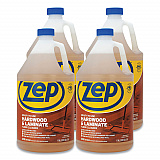
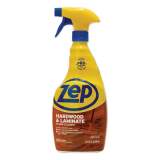
Sealed wood and laminate typically perform best with low-residue, fast-drying cleaners that do not over-wet the surface. If you are maintaining wood floors, choose products intended for sealed wood to help reduce streaking and protect the finish.
Concrete and industrial floors
Warehouses, back-of-house kitchens, and loading areas often need higher soil-cutting power. Choose a cleaner formulated for heavy soils and compatible with your equipment. Always confirm dilution ratios and rinse requirements to prevent residue that can attract dirt.
How to select a floor cleaner that performs (and saves labor)
Match chemistry to the soil load
Neutral cleaners are the go-to for routine cleaning and finish maintenance. Alkaline cleaners handle heavier soils and some grease. If your main problem is oil and kitchen film, you may get better results by switching to All Purpose Cleaners & Degreasers for those areas, then returning to a neutral floor cleaner for daily routes.
Concentrate vs. ready-to-use
Concentrates lower cost per gallon and reduce storage space, making them a strong fit for recurring purchasing and multi-site accounts. Ready-to-use options can be faster for small areas, spot cleaning, and teams that need simple, consistent application. If you are managing multiple shifts, concentrates paired with measured dispensing can help control usage and results.
Auto scrubber, mop-and-bucket, or spray mop
Auto scrubbers typically require low-foam formulas to protect vacuum motors and improve recovery. Mop-and-bucket programs benefit from good soil suspension and low residue to reduce re-mopping. For quick touch-ups, spray-and-wipe or spray mop systems can keep entrances and aisles presentable between full cleans.
Residue control and slip risk
Residue is a common cause of streaking, rapid re-soiling, and slippery floors. Follow label dilution, use clean water, and avoid mixing products unless the manufacturer allows it. If you need to kill germs on floors in addition to cleaning, use a cleaner first, then apply an approved product from Disinfectants & Sanitizers according to dwell time and label directions.
When you need more than a cleaner
Restoring gloss and protection
Cleaners maintain, but they do not replace protective coatings. If your VCT or resilient floors look dull even after cleaning, you may be due for a maintenance coat or a full refinishing plan. For protective coatings and shine control, see Floor Finishes to match your desired gloss level and durability.
Removing old finish and embedded soil
When finishes are layered, yellowed, or trapping dirt, stripping may be required before re-finishing. For periodic restoration projects, use Floor Strippers to remove old coatings safely and prepare the surface for a new finish system.
Bulk buying and program consistency
Facilities that order floor cleaners in bulk typically see fewer stockouts, more consistent results, and better labor planning. Standardizing on a small set of SKUs across locations also simplifies training and reduces mistakes with dilution and application. If you are unsure which formula fits your floors, equipment, and soil load, our support team can help you narrow options quickly.
With over 100 SKUs, you can build a complete floor care program for daily cleaning, periodic deep cleaning, and restoration - while keeping costs controlled and deliveries fast.
Floor Cleaners FAQ
Can I use floor cleaner in an auto scrubber?
Yes, but choose a low-foam formula labeled for auto scrubbers and follow the recommended dilution. Using the wrong product can cause excess foam, poor recovery, and residue that leads to streaking and faster re-soiling.
Do I need a disinfectant if I already use a floor cleaner?
Often, yes. Most floor cleaners are designed to remove soil, not to disinfect. For germ-kill requirements, clean first, then apply a disinfectant or sanitizer that is labeled for floors and follow the required dwell time.
How do I stop floors from looking streaky after mopping?
Streaking is usually caused by over-concentration, dirty mop water, or residue from incompatible products. Use the correct dilution, change water frequently, rinse if the label requires it, and avoid mixing chemicals unless the manufacturer allows it.
Should I buy floor cleaner concentrate or ready-to-use?
Concentrates usually offer the lowest cost per use and are ideal for recurring purchasing and multi-site facilities. Ready-to-use products can be better for small areas, quick touch-ups, or teams that need the simplest application with consistent results.
What is the best floor cleaner for commercial use?
The best option depends on floor type and soil load. Neutral, low-residue cleaners are typically best for daily cleaning on VCT, vinyl, and sealed surfaces, while higher-alkaline formulas are used for heavier soils in industrial areas. Confirm the label for surface compatibility and dilution guidance.