
Mop Heads

Filters Clear All
Brands
Price
Application
Compatible With
For Use With
Head Type
Mop Head Color
Mop Head Material
Mop Head Size
Mop Head Style
Mop Head Type
Washable





1-2 Day Delivery
$10.69 $22.83
Choose Your Frequency:
Volume Pricing
1-2 Day Delivery
$7.75 $15.80
Choose Your Frequency:
Volume Pricing
1-2 Day Delivery
$10.76 $20.03
Choose Your Frequency:
Volume Pricing
1-2 Day Delivery
$13.58 $29.49
Choose Your Frequency:
Volume Pricing
1-2 Day Delivery
$18.28 $40.34
Choose Your Frequency:
Volume Pricing
1-2 Day Delivery
$18.04 $39.60
Choose Your Frequency:
Volume Pricing
1-2 Day Delivery
$13.18 $25.39
Choose Your Frequency:
Volume Pricing
1-2 Day Delivery
$168.43 $213.08
Box of 10($16.84/Each)
Choose Your Frequency:
Volume Pricing
1-2 Day Delivery
$18.38 $39.60
Choose Your Frequency:
Volume Pricing
1-2 Day Delivery
$145.75 $176.26
Box of 160($0.91/Each)
Choose Your Frequency:
Volume Pricing
1-2 Day Delivery
$137.69 $168.42
Box of 12($11.47/Each)
Choose Your Frequency:
Volume Pricing
1-2 Day Delivery
$5.41 $9.10
Choose Your Frequency:
Volume Pricing
1-2 Day Delivery
$3.79 $6.93
Choose Your Frequency:
Volume Pricing
1-2 Day Delivery
$8.05 $14.17
Choose Your Frequency:
Volume Pricing
1-2 Day Delivery
$1.58 $2.41
Choose Your Frequency:
Volume Pricing
1-2 Day Delivery
$340.94 $530.76
Case of 10($34.09/Pack)
Choose Your Frequency:
Volume Pricing
1-2 Day Delivery
$9.07 $14.22
Choose Your Frequency:
Volume Pricing
1-2 Day Delivery
$111.96 $170.64
Case of 12($9.33/Each)
Choose Your Frequency:
Volume Pricing
1-2 Day Delivery
$16.15 This item is listed at the minimum advertised price.
Choose Your Frequency:
Volume Pricing
1-2 Day Delivery
$16.45 $27.84
Pack of 2
Choose Your Frequency:
Volume Pricing
1-2 Day Delivery
$26.63 $48.76
Choose Your Frequency:
Volume Pricing
1-2 Day Delivery
$33.77 This item is listed at the minimum advertised price.
Choose Your Frequency:
Volume Pricing
1-2 Day Delivery
$43.07 $75.16
Choose Your Frequency:
Volume Pricing
1-2 Day Delivery
$138.82 $222.76
Case of 6($23.14/Each)
Choose Your Frequency:
Volume Pricing
1-2 Day Delivery
$14.15 $24.36
Choose Your Frequency:
Volume Pricing
1-2 Day Delivery
$12.66 $25.99
Choose Your Frequency:
Volume Pricing
1-2 Day Delivery
$84.11 $114.02
Choose Your Frequency:
Volume Pricing
1-2 Day Delivery
$164.62 $311.88
Case of 12($13.72/Each)
Choose Your Frequency:
Volume Pricing
1-2 Day Delivery
$21.91 $37.75
Choose Your Frequency:
Volume Pricing
1-2 Day Delivery
$5.42 $92.33
Case of 12($0.45/Each)
Choose Your Frequency:
Volume Pricing
1-2 Day Delivery
$5.34 $113.72
Case of 12($0.45/Each)
Choose Your Frequency:
Volume Pricing
1-2 Day Delivery
$44.64 $77.20
Case of 11($22.32/Pack)
Choose Your Frequency:
Volume Pricing
1-2 Day Delivery
$16.45 $27.89
Pack of 2
Choose Your Frequency:
Volume Pricing
1-2 Day Delivery
$98.65 $187.32
Case of 12($8.22/Each)
Choose Your Frequency:
Volume Pricing
1-2 Day Delivery
$69.98 $111.12
Case of 6($11.66/Each)
Choose Your Frequency:
Volume Pricing
1-2 Day Delivery
$68.86 $104.46
Case of 6($11.48/Each)
Choose Your Frequency:
Volume Pricing
Mop heads built for commercial cleaning
Mop heads are a wear item - and the right replacement makes a measurable difference in labor time, floor appearance, and compliance. This category focuses on commercial-grade options for routine wet mopping, disinfectant application, and heavy soil pickup across offices, schools, restaurants, and healthcare environments.
With 100+ SKUs, low pricing, and 1-2 day shipping on many items, you can standardize on a few proven mop head types and reorder in bulk to reduce emergency runs and freight surprises.
Choose the right mop head material
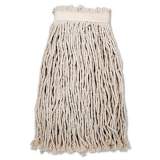
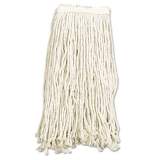
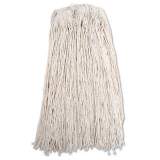
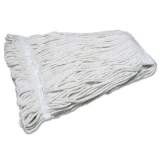
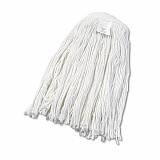
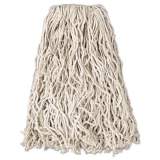
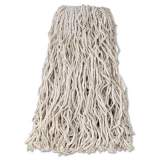
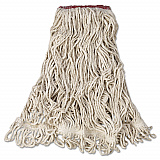
Cotton is a common choice for general-purpose wet mopping. It is absorbent and cost-effective, making it a practical fit for high-volume replacement cycles.
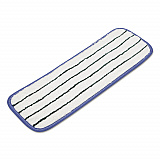
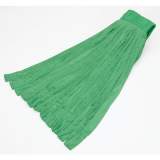
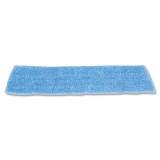
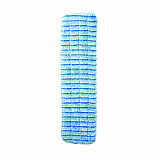
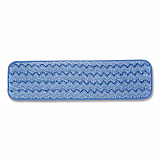
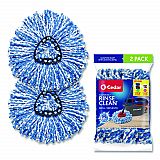
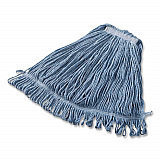
Microfiber is designed to improve soil pickup and can reduce chemical and water usage when paired with the right process. Many facilities prefer microfiber for consistent results and faster dry times, especially in higher-visibility areas.
Blended yarn (cotton/synthetic) can balance absorbency with durability, helping mop heads hold up longer in demanding schedules.
Cut-end vs looped-end: durability and lint control
Cut-end mop heads are typically lower cost and work well for light-to-medium duty. They can lint more and may fray faster, so they are often chosen when replacement frequency is already high.
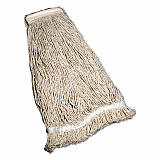
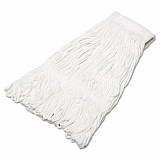
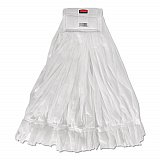
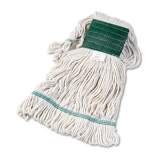
Looped-end mop heads are built for longer service life and reduced tangling. They are a strong fit for facilities that want fewer changeouts, better yarn control, and more consistent coverage on large floor areas.
Size, weight, and coverage
Mop heads are commonly specified by weight (for example, 12 oz, 16 oz, 20 oz, 24 oz, 32 oz). Heavier options generally hold more solution and cover more area per dip, which can reduce trips to the bucket. Lighter options can be easier for staff to maneuver and may be preferred for smaller rooms or frequent wringing cycles.
Match the mop head size to your floor plan and cleaning cadence. For large corridors and dining areas, higher-capacity heads can improve productivity. For tight spaces and restrooms, a smaller head can improve control and reduce splash.
Headbands and handle compatibility
Pay attention to headband style and width to ensure a secure fit. Common commercial setups use narrow or wide headbands that clamp into a jaw-style handle. If you are replacing heads across multiple sites, standardizing headband type helps prevent mismatches and wasted inventory.
If you need to refresh worn hardware at the same time, pair your replacements with Mop Handles to keep clamp tension reliable and reduce spin or slippage during use.
Use-case guidance: where each type fits best
General maintenance: Cotton or blended looped-end mop heads for daily cleaning in offices, schools, and retail.
Grease and food service soils: Durable looped-end options that tolerate frequent laundering and heavier wringing cycles.
Healthcare and compliance-driven programs: Microfiber systems are often selected for controlled application and consistent performance. Always follow your facility protocol for laundering, disinfectant dwell time, and cross-contamination prevention.
Bulk purchasing and changeout planning
For procurement teams, mop heads are easiest to manage when you set a par level by building, shift, or cart. Ordering by the case helps lock in price advantage, reduces per-unit shipping cost, and keeps your team from stretching worn mop heads past their useful life.
Need a full floor-care refresh beyond replacements? If you are evaluating complete assemblies, browse Mops for ready-to-use options. For a complete wet-mopping station, add Buckets & Wringers to improve wring-out consistency and reduce slip hazards from over-wet floors.
Brands and consistency across locations
Many facilities standardize by brand and spec to keep training simple and results consistent. This category includes commercial lines from Boardwalk, Rubbermaid Commercial, Unger, AbilityOne, O'Dell, O-Cedar, Rubbermaid, Swiffer, Impact, and Nexstep Commercial Products. If you are matching an existing program, confirm headband style, weight, and yarn type before placing a multi-site order.
Ordering tips to avoid returns
Before checkout, verify three details: (1) headband type/width, (2) mop head weight and yarn material, and (3) whether you need cut-end or looped-end. If you are unsure, customer support can help you cross-reference what you are using today and recommend the closest match for performance and budget.
Mop Heads FAQ
Are looped-end mop heads better than cut-end?
Looped-end mop heads typically last longer, tangle less, and lint less than cut-end styles, making them a better fit for higher-traffic areas and larger floor plans. Cut-end mop heads are often selected when lowest upfront cost is the priority.
How do I choose between cotton and microfiber mop heads?
Choose cotton for cost-effective, general-purpose wet mopping and frequent replacement cycles. Choose microfiber when you want stronger soil pickup, faster drying, and more controlled chemical and water use, following your facility laundering and disinfectant protocols.
Should I buy mop heads in bulk?
Yes. Case quantities help lower per-unit cost, reduce shipping impact, and keep par levels on hand so staff can replace worn mop heads on schedule instead of stretching them past their useful life.
What mop head size should I buy for my facility?
Use heavier mop heads to cover more square footage per dip and reduce trips to the bucket in large areas. Use lighter mop heads for tighter spaces, easier handling, and frequent wringing. Match the head weight and headband style to your handle and workflow.
Will these replacement mop heads fit my existing mop handle?
Fit depends on the headband style and width used by your handle (commonly jaw-style clamps). Check your current headband measurement and clamp type, or contact support with your handle model and current mop head spec for a match.