
All Purpose Cleaners & Degreasers

Filters Clear All
Brands
- Betco
- Diversey
- Fabuloso
- Clorox
- Mr. Clean
- Soft Scrub
- Comet
- AbilityOne
- Fantastik
- Pine-Sol
- 3M
- Ajax
- Armor All
- Boardwalk
- CLR PRO
- Easy Paks
- ECOS PRO
- Fresh Products
- Fresquito
- Kess
- Lestoil
- LYSOL Brand
- Method
- Misty
- Mr. Clean PRO
- Mrs. Meyer's
- Murphy
- PAK-IT
- Pledge
- Rust-Oleum
- SC Johnson Professional
- Seventh Generation
- simple green
- Sprayway
- Sprayway PRO LINE
- The Pink Stuff
- Tide Professional
- Ultra Palmolive
- Windex
- Zep
- Zep Commercial
Price
Applicable Material
Application
Capacity (Volume)
Capacity (Weight)
Chemical Compound
Compatible With
Dirt Types
Packing Type
Physical Form
Product Packaging
Scent
Volume Capacity




1-2 Day Delivery
$60.67 $153.63
Choose Your Frequency:
Volume Pricing
1-2 Day Delivery
$34.91 $97.92
Box of 12($2.91/Each)
Choose Your Frequency:
Volume Pricing
1-2 Day Delivery
$65.75 $161.29
Choose Your Frequency:
Volume Pricing
1-2 Day Delivery
$34.74 $97.92
Box of 12($2.90/Each)
Choose Your Frequency:
Volume Pricing
1-2 Day Delivery
$33.08 $61.04
Case of 8($4.14/Each)
Choose Your Frequency:
Volume Pricing
1-2 Day Delivery
$7.21 $9.98
Choose Your Frequency:
Volume Pricing
1-2 Day Delivery
$32.46 $59.88
Case of 6($5.41/Each)
Choose Your Frequency:
Volume Pricing
1-2 Day Delivery
$47.39 $83.86
Case of 8($5.92/Each)
Choose Your Frequency:
Volume Pricing
1-2 Day Delivery
$5.05 $11.07
Choose Your Frequency:
Volume Pricing
1-2 Day Delivery
$12.56 $23.34
Choose Your Frequency:
Volume Pricing
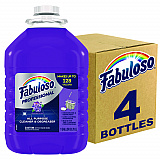
1-2 Day Delivery
$49.79 $93.36
Case of 4($12.45/Each)
Choose Your Frequency:
Volume Pricing
1-2 Day Delivery
$119.95 This item is listed at the minimum advertised price.
Choose Your Frequency:
Volume Pricing
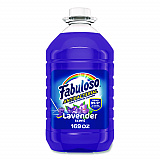
1-2 Day Delivery
$20.95 $28.97
Choose Your Frequency:
Volume Pricing
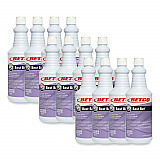
1-2 Day Delivery
$57.16 $100.87
Case of 12($4.76/Each)
Choose Your Frequency:
Volume Pricing
1-2 Day Delivery
$34.82 $55.86
Choose Your Frequency:
Volume Pricing
1-2 Day Delivery
$7.22 $9.91
Choose Your Frequency:
Volume Pricing
1-2 Day Delivery
$33.58 $59.46
Case of 6($5.60/Each)
Choose Your Frequency:
Volume Pricing
1-2 Day Delivery
$7.22 $9.91
Choose Your Frequency:
Volume Pricing
1-2 Day Delivery
$33.58 $59.46
Case of 6($5.60/Each)
Choose Your Frequency:
Volume Pricing
Scheduled Freight Delivery
$69.32 $120.40
Case of 8($8.67/Each)
Choose Your Frequency:
Volume Pricing
1-2 Day Delivery
$72.92 $129.15
Case of 3($24.31/Each)
Choose Your Frequency:
Volume Pricing
1-2 Day Delivery
$72.92 $129.15
Choose Your Frequency:
Volume Pricing
1-2 Day Delivery
$32.46 $65.70
Case of 6($5.41/Each)
Choose Your Frequency:
Volume Pricing
1-2 Day Delivery
$7.21 $10.95
Choose Your Frequency:
Volume Pricing
1-2 Day Delivery
$33.08 $61.04
Case of 8($4.14/Each)
Choose Your Frequency:
Volume Pricing
1-2 Day Delivery
$5.30 $7.85
Choose Your Frequency:
Volume Pricing
1-2 Day Delivery
$59.23 $111.48
Case of 4($14.81/Each)
Choose Your Frequency:
Volume Pricing
1-2 Day Delivery
$38.64 $70.65
Case of 9($4.29/Each)
Choose Your Frequency:
Volume Pricing
1-2 Day Delivery
$41.35 $75.80
Case of 8($5.17/Each)
Choose Your Frequency:
Volume Pricing
1-2 Day Delivery
$33.89 $63.90
Case of 3($11.30/Each)
Choose Your Frequency:
Volume Pricing
1-2 Day Delivery
$33.92 $63.90
Case of 3($11.31/Each)
Choose Your Frequency:
Volume Pricing
1-2 Day Delivery
$13.70 $23.68
Choose Your Frequency:
Volume Pricing
1-2 Day Delivery
$37.67 $71.04
Case of 3($12.56/Each)
Choose Your Frequency:
Volume Pricing
1-2 Day Delivery
$37.67 $71.04
Case of 3($12.56/Each)
Choose Your Frequency:
Volume Pricing
1-2 Day Delivery
$37.67 $71.04
Case of 3($12.56/Each)
Choose Your Frequency:
Volume Pricing
1-2 Day Delivery
$33.98 $38.84
Case of 6($5.66/Each)
Choose Your Frequency:
Volume Pricing
All Purpose Cleaners and Degreasers for Commercial Cleaning
All purpose cleaners and degreasers are the workhorses of facility maintenance: they remove everyday dirt, oils, and grime across multiple surfaces with fewer product changeovers. For restaurants, schools, offices, healthcare, and service businesses, the right cleaner improves labor efficiency, reduces rework, and helps standardize results across teams.
Choose from trusted brands like Fabuloso, Betco, Diversey, Mr. Clean, AbilityOne, Boardwalk, Clorox, Pine-Sol, Soft Scrub, and Comet. With 100+ SKUs, low prices, and 1-2 day shipping, its easy to keep closets stocked and avoid downtime.
Cleaner vs. degreaser: what to use and when
All purpose cleaners are designed for routine soils: dust, tracked-in dirt, light food residue, and general film. They are ideal for daily wipe-downs on desks, counters, walls, doors, and many washable hard surfaces.
Degreasers are formulated to break down oils and heavy soils faster, making them a better fit for kitchens, back-of-house areas, loading docks, shop floors, and equipment exteriors. If your team is scrubbing the same spot repeatedly, a stronger degreaser (or higher dilution strength) often solves the problem.
Key selection criteria buyers care about
Soil type and load. Match the chemistry to the mess. Grease and petroleum soils typically need a true degreaser, while general grime responds well to an all purpose cleaner.
Surface compatibility. Verify the label for safe use on painted surfaces, sealed floors, stainless, plastics, and finished fixtures. When in doubt, spot test in an inconspicuous area and follow dwell time instructions.
Concentrate vs. ready-to-use. Concentrates lower cost-per-use and reduce storage space, especially for recurring purchasing. Ready-to-use options simplify training and are convenient for quick response cleaning.
Scent and user experience. Fragrance can matter in customer-facing spaces. Choose lighter scents for offices and healthcare, and stronger odor-masking options for high-traffic restrooms, breakrooms, and trash areas.
Compliance and documentation. Many facilities need clear labeling, SDS availability, and consistent product specs for audits and staff training. Standardizing on a short list of approved cleaners helps procurement and reduces risk.
Where these products perform best
Front-of-house and public areas: counters, tables, doors, walls, and high-touch surfaces (when used as a cleaner, not a disinfectant unless the label states disinfecting claims).
Back-of-house and industrial zones: prep areas, equipment exteriors, concrete, and greasy floors where faster soil release reduces labor time.
Fleet and maintenance: tools, parts bins, and general maintenance wipe-downs where residue control and rinse requirements matter.
How to buy smarter: dilution, dispensing, and total cost
For procurement teams, the best value is rarely the lowest unit price - it is the lowest cost per diluted gallon that still hits performance targets. Concentrated degreasers can deliver significant savings when paired with proper dilution control, while ready-to-use products can reduce mistakes and callbacks in high-turnover environments.
Consider standardizing on a few formats: a concentrate for mop buckets and autoscrubbers, and a ready-to-use spray for quick wipe-downs. Buying by the case improves price breaks, reduces freight cost per unit, and helps you maintain consistent inventory across locations.
When you may need a different chemical category
If the goal is pathogen kill claims rather than soil removal, pair cleaning with the right disinfectant. For those applications, see Disinfectants & Sanitizers to match dwell times and approved use sites.
For restroom-specific soils like soap scum and hard water film, a general cleaner may underperform. Use Bathroom Cleaners for fixtures and surfaces, and Toilet Bowl Cleaners for bowl and urinal descaling and deodorizing.
When grease is baked-on or carbonized, step up to a dedicated formula. Oven & Grill Cleaners are built for high-heat soils that all purpose degreasers are not designed to remove efficiently.
Operational tips that reduce rework
Follow dwell time. Let the product work before wiping. Rushing removal is a common cause of streaking and repeat cleaning.
Use the right tool. Microfiber improves soil pickup and reduces chemical usage. For heavy grease, use a scrub pad rated for the surface.
Rinse when required. Food-contact areas and some floor applications may require a potable water rinse. Always follow the label.
Train for consistency. Simple dilution charts and labeled spray bottles reduce overuse, residue, and slip risk.
Why buyers stock up here
With a broad assortment across leading commercial brands, you can standardize products across sites and keep purchasing predictable. Low pricing supports bulk ordering, 1-2 day shipping helps prevent stockouts, and knowledgeable support is available when you need help matching a formula to a surface, soil type, or use area.
All Purpose Cleaners & Degreasers FAQ
Are these cleaners safe on stainless steel and painted surfaces?
Many are, but it depends on the formula and dilution. Check the product label for approved surfaces, follow dwell time and rinse directions, and spot test first on sensitive finishes.
Do I need a disinfectant if I am already using an all purpose cleaner?
Cleaning removes soils, but it does not automatically provide disinfecting claims. If you need pathogen kill claims, use a product labeled as a disinfectant and follow the required dwell time.
How do I reduce residue or streaking after cleaning?
Use the correct dilution, allow proper dwell time, and wipe with clean microfiber. Rinse when the label requires it, especially on food-contact surfaces or where buildup is a concern.
Should I buy concentrate or ready-to-use?
Concentrates usually deliver the lowest cost per use and are ideal for recurring purchasing and multi-site operations. Ready-to-use products reduce mixing errors and speed up daily wipe-downs.
What is the difference between an all purpose cleaner and a degreaser?
All purpose cleaners target everyday soils like dirt and light residue. Degreasers are formulated to break down oils and heavy grease faster, making them better for kitchens, shop areas, and industrial messes.