
Disinfectants & Sanitizers
Filters Clear All
Brands
- LYSOL Brand
- Clorox
- Diversey
- Lysol
- Betco
- Clorox Healthcare
- Comet
- PURELL
- Windex
- Fantastik
- 3M
- AbilityOne
- Alpha Chemical
- Benefect
- Big-D
- Boardwalk
- Chase Products
- Claire
- Clean Quick
- DCT
- Dymon
- FAST ORANGE
- Fiberlock Technologies
- Fit
- Formula 409
- FRYFLEX
- Maxim
- Misty
- Opti-Cide Max
- Oxivir
- Pine-Sol
- Pure Bright
- Rubbermaid Commercial
- SC Johnson Professional
- Scrubbing Bubbles
- Seventh Generation
- simple green
- Spic and Span
- Tide
- Wexford Labs
- Zep
- Zep Commercial
Price
Applicable Material
Application
Capacity (Volume)
Capacity (Weight)
Chemical Compound
Compatible With
Dirt Types
Packing Type
Physical Form
Product Packaging
Scent
Volume Capacity

1-2 Day Delivery
$6.91 $10.32
Choose Your Frequency:
Volume Pricing
1-2 Day Delivery
$67.75 $123.84
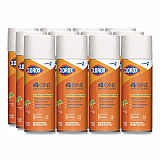
Case of 12($5.65/Each)
Choose Your Frequency:
Volume Pricing
1-2 Day Delivery
$298.79 $638.82
Box of 6($49.80/Each)
Choose Your Frequency:
Volume Pricing
1-2 Day Delivery
$65.99 $80.51
Choose Your Frequency:
Volume Pricing
1-2 Day Delivery
$6.07 $9.72
Choose Your Frequency:
Volume Pricing
1-2 Day Delivery
$72.98 $116.64
Case of 12($6.08/Each)
Choose Your Frequency:
Volume Pricing
1-2 Day Delivery
$76.44 Great news! The price of this item drops at checkout, but we can't show it here due to manufacturer restrictions. Add it to your cart to see your exclusive deal!
Case of 4
Choose Your Frequency:
Volume Pricing
1-2 Day Delivery
$80.64 Great news! The price of this item drops at checkout, but we can't show it here due to manufacturer restrictions. Add it to your cart to see your exclusive deal!
Case of 12
Choose Your Frequency:
Volume Pricing
1-2 Day Delivery
$120.00 Great news! The price of this item drops at checkout, but we can't show it here due to manufacturer restrictions. Add it to your cart to see your exclusive deal!
Case of 4
Choose Your Frequency:
Volume Pricing
Scheduled Freight Delivery
$158.08 Great news! The price of this item drops at checkout, but we can't show it here due to manufacturer restrictions. Add it to your cart to see your exclusive deal!
Case of 4
Choose Your Frequency:
Volume Pricing
1-2 Day Delivery
$49.81 $88.80
($8.30/Each)
Choose Your Frequency:
Volume Pricing
1-2 Day Delivery
$8.12 $14.90
Choose Your Frequency:
Volume Pricing
1-2 Day Delivery
$48.77 $89.40
Case of 6($8.13/Each)
Choose Your Frequency:
Volume Pricing
1-2 Day Delivery
$50.48 $89.40
Case of 6($8.41/Each)
Choose Your Frequency:
Volume Pricing
1-2 Day Delivery
$8.41 $14.90
Choose Your Frequency:
Volume Pricing
1-2 Day Delivery
$8.41 $14.90
Choose Your Frequency:
Volume Pricing
1-2 Day Delivery
$50.48 $89.40
Case of 6($8.41/Each)
Choose Your Frequency:
Volume Pricing
1-2 Day Delivery
$87.95 This item is listed at the minimum advertised price.
Case of 2
Choose Your Frequency:
Volume Pricing
1-2 Day Delivery
$36.96 $113.72
Choose Your Frequency:
Volume Pricing
1-2 Day Delivery
$199.08 $353.53
Case of 12($16.59/Each)
Choose Your Frequency:
Volume Pricing
1-2 Day Delivery
$6.28 $8.86
Choose Your Frequency:
Volume Pricing
1-2 Day Delivery
$75.31 $106.32
Case of 12($6.28/Each)
Choose Your Frequency:
Volume Pricing
1-2 Day Delivery
$26.82 $45.05
Choose Your Frequency:
Volume Pricing
1-2 Day Delivery
$98.30 $180.20
Case of 4($24.58/Each)
Choose Your Frequency:
Volume Pricing
1-2 Day Delivery
$80.27 $147.18
Case of 6($13.38/Each)
Choose Your Frequency:
Volume Pricing
1-2 Day Delivery
$14.18 $24.53
Choose Your Frequency:
Volume Pricing
1-2 Day Delivery
$80.27 $147.18
Case of 6($13.38/Each)
Choose Your Frequency:
Volume Pricing
1-2 Day Delivery
$43.86 $78.08
Case of 8($5.48/Each)
Choose Your Frequency:
Volume Pricing
1-2 Day Delivery
$6.19 $9.76
Choose Your Frequency:
Volume Pricing
1-2 Day Delivery
$86.40 $166.56
Case of 12($7.20/Each)
Choose Your Frequency:
Volume Pricing
1-2 Day Delivery
$56.30 $76.00
Choose Your Frequency:
Volume Pricing
1-2 Day Delivery
$46.72 $76.00
Choose Your Frequency:
Volume Pricing
1-2 Day Delivery
$52.16 $126.36
Case of 9($5.80/Each)
Choose Your Frequency:
Volume Pricing
1-2 Day Delivery
$52.16 $126.36
Case of 9($5.80/Each)
Choose Your Frequency:
Volume Pricing
1-2 Day Delivery
$23.26
Case of 8($2.91/Each)
Choose Your Frequency:
Volume Pricing
1-2 Day Delivery
$63.60 $119.64
Case of 4($15.90/Each)
Choose Your Frequency:
Volume Pricing
Disinfectants and sanitizers for commercial facilities
Disinfectants and sanitizers are not interchangeable, and buying the right one protects your staff, customers, and compliance requirements. This category is built for commercial use across offices, schools, restaurants, healthcare, and service businesses - with 100+ SKUs, low pricing, and quick 1-2 day shipping to keep you stocked.
Brands include Diversey, Betco, Clorox, Clorox Healthcare, LYSOL Brand, Lysol, 3M, PURELL, simple green, and Comet. If you are standardizing across multiple locations, ask support for help matching actives, dwell times, and formats so you can reorder confidently.
How to choose the right product
Disinfectant vs sanitizer: what you are actually buying
Disinfectants are intended to kill or inactivate pathogens on hard, non-porous surfaces when used per label directions (including required contact time). Sanitizers reduce bacteria on surfaces to public health standards and are commonly used for food-contact and high-turnover areas. Always follow the product label for approved surfaces, dilution, and dwell time.
Format: wipes, sprays, RTU, or concentrates
Disinfecting wipes are fast for touchpoints like door handles, counters, and shared equipment. Ready-to-use sprays reduce mixing errors and are ideal for smaller teams. Concentrates typically lower cost per use and are a strong fit for janitorial programs, auto-scrubbers, and multi-site purchasing - but require correct dilution control.
Active ingredients and compatibility
Common actives include quaternary ammonium compounds (quats), sodium hypochlorite (bleach), hydrogen peroxide, and alcohol-based formulas. Surface compatibility matters: some actives can discolor fabrics, corrode metals, or damage finishes if misused. When in doubt, test in an inconspicuous area and confirm label guidance for stainless, plastics, and sealed floors.
Contact time (dwell time) and workflow
Contact time is the minimum wet time required for the claim on the label. If your team cannot realistically keep a surface wet for the listed dwell time, choose a different product or format. Wipes can help maintain wetness on small surfaces, while sprays and foams can be better for larger areas.
Where these products fit in your cleaning program
High-touch areas and daily maintenance
Use disinfectants for high-touch points such as breakrooms, restrooms, lobbies, and shared devices. For routine cleaning where soil removal is the priority, pair your disinfectant with a cleaner that lifts grease and grime first - then disinfect on the clean surface for best results.
Foodservice and back-of-house considerations
For kitchens and prep areas, confirm the product is labeled for food-contact surfaces and follow rinse requirements if applicable. If you are also managing heavy grease, consider pairing with All Purpose Cleaners & Degreasers to remove soils before sanitizing or disinfecting.
Healthcare and higher-risk environments
Healthcare and high-risk settings often require specific claims, faster turnaround, and tighter process control. If you need bleach-based protocols or sporicidal approaches, review label claims carefully and align with your facility policy. For chlorine-based options and related supplies, you may also want to compare against Bleach depending on your standard operating procedures.
Compliance and safety checkpoints buyers should verify
Label claims and regulatory alignment
Disinfectants and sanitizers are regulated products. Verify the label directions, approved use sites, and required contact time. Train staff on proper application, ventilation, and PPE where required. Keep Safety Data Sheets accessible and standardize SKUs to reduce errors across shifts.
Surface and equipment protection
Repeated exposure to harsh chemistries can dull finishes or corrode metals. For facilities with a lot of stainless fixtures and appliances, consider maintaining a separate care routine using Stainless Steel Cleaners to protect appearance after disinfection steps.
Buying in bulk: reduce cost per use and prevent stockouts
Bulk purchasing helps lock in price advantage and keeps crews productive. Choose case packs of wipes for high-traffic areas, and concentrates for janitorial closets and multi-location programs. If you are managing recurring demand, standardize a short list of approved products and reorder on a schedule to avoid substitutions that disrupt training and compliance.
Need help selecting the right disinfectant or sanitizer for your facility type, surfaces, or workflow? Our knowledgeable support team can help you match the right format, claims, and value so you can place a clean, confident order.
Disinfectants & Sanitizers FAQ
Are these products safe on stainless steel and finished surfaces?
Some actives can discolor, dull, or corrode certain materials if overused or left to dry. Check the label for surface compatibility, follow dilution directions, and test in an inconspicuous area. For appearance maintenance, use a dedicated stainless steel cleaner after disinfection where appropriate.
Do disinfectants need a specific contact time to work?
Yes. The surface must stay visibly wet for the contact time listed on the label to achieve the stated kill or sanitizing claim. If your process cannot maintain wet time, select a product with a shorter contact time or a different format.
How do I choose between wipes and spray disinfectants?
Choose wipes for fast application on small, high-touch surfaces and when you need to maintain wet contact time easily. Choose sprays or foams for larger areas, better coverage, and when wipes would be wasteful. For lowest cost per use, consider concentrates if your team can mix accurately.
What is the difference between a disinfectant and a sanitizer?
A disinfectant is labeled to kill or inactivate pathogens on hard, non-porous surfaces when used per the required contact time. A sanitizer reduces bacteria to public health standards and is often used on food-contact or high-turnover surfaces. Always follow the product label.
What should I buy in bulk to avoid running out?
For most facilities, case packs of disinfecting wipes cover daily high-touch cleaning, while concentrates reduce cost per use for larger areas and janitorial programs. Standardizing a few approved SKUs makes reordering easier and reduces training and compliance issues.