
Forks




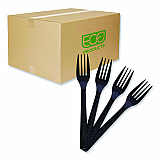
1-2 Day Delivery
$63.91 $101.82
Case of 1000($0.06/Each)
Choose Your Frequency:
Volume Pricing
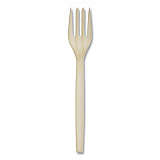
1-2 Day Delivery
$3.97 $7.02
Pack of 50
Choose Your Frequency:
Volume Pricing
1-2 Day Delivery
$81.25 $140.40
Case of 1000($0.08/Each)
Choose Your Frequency:
Volume Pricing
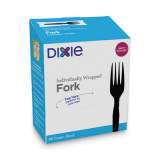
1-2 Day Delivery
$44.26 $96.20
Case of 540($0.08/Each)
Choose Your Frequency:
Volume Pricing
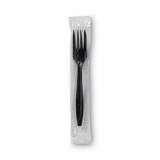
1-2 Day Delivery
$61.80 $132.27
Case of 1000($0.06/Each)
Choose Your Frequency:
Volume Pricing
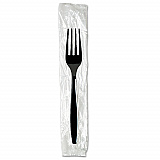
1-2 Day Delivery
$76.76 $175.29
Case of 1000($0.08/Each)
Choose Your Frequency:
Volume Pricing
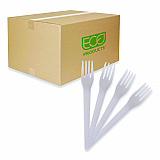
1-2 Day Delivery
$73.18 $155.57
Case of 1000($0.07/Each)
Choose Your Frequency:
Volume Pricing
1-2 Day Delivery
$41.48 $77.46
Case of 1000($0.04/Each)
Choose Your Frequency:
Volume Pricing
1-2 Day Delivery
$34.88 $78.97
Case of 1000($0.03/Each)
Choose Your Frequency:
Volume Pricing
1-2 Day Delivery
$45.20 $127.25
Case of 1000($0.05/Each)
Choose Your Frequency:
Volume Pricing
1-2 Day Delivery
$45.20 $97.71
Case of 1000($0.05/Each)
Choose Your Frequency:
Volume Pricing
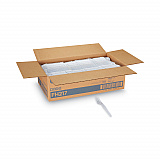
1-2 Day Delivery
$45.35 $130.69
Case of 1000($0.05/Each)
Choose Your Frequency:
Volume Pricing
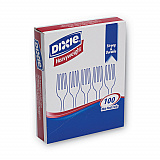
1-2 Day Delivery
$8.21 $18.39
Box of 100($0.08/Each)
Choose Your Frequency:
Volume Pricing
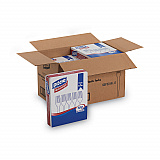
1-2 Day Delivery
$60.68 $183.90
Case of 1000($0.06/Each)
Choose Your Frequency:
Volume Pricing
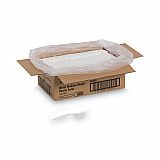
1-2 Day Delivery
$28.01 $60.51
Case of 1000($0.03/Each)
Choose Your Frequency:
Volume Pricing
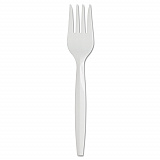
1-2 Day Delivery
$42.28 $98.91
Case of 960($0.04/Each)
Choose Your Frequency:
Volume Pricing
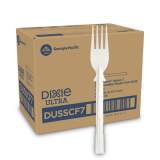
1-2 Day Delivery
$131.12 $227.54
Case of 960($0.14/Each)
Choose Your Frequency:
Volume Pricing
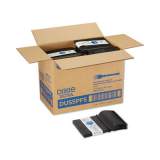
1-2 Day Delivery
$56.39 $122.33
Case of 960($0.06/Each)
Choose Your Frequency:
Volume Pricing
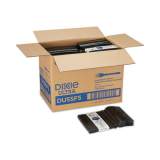
1-2 Day Delivery
$53.32 $102.81
Case of 960($0.06/Each)
Choose Your Frequency:
Volume Pricing
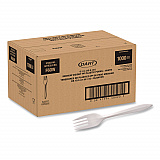
1-2 Day Delivery
$26.16 $39.59
Case of 1000($0.03/Each)
Choose Your Frequency:
Volume Pricing
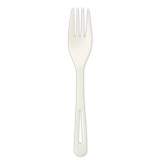
1-2 Day Delivery
$47.40 $78.50
Case of 1000($0.05/Each)
Choose Your Frequency:
Volume Pricing
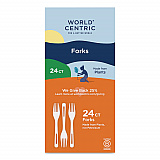
1-2 Day Delivery
$2.14 $3.25
Choose Your Frequency:
Volume Pricing
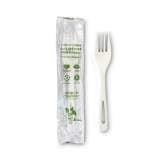
1-2 Day Delivery
$50.59 $84.38
Case of 750($0.07/Each)
Choose Your Frequency:
Volume Pricing
1-2 Day Delivery
$48.96 $86.70
Case of 1000($0.05/Each)
Choose Your Frequency:
Volume Pricing
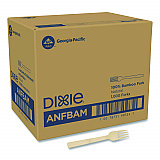

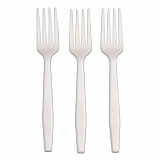
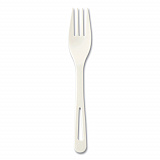
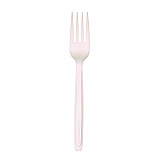

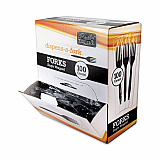
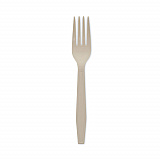
Bulk disposable forks for foodservice, offices, and events
Disposable forks are a high-turn item for restaurants, catering, healthcare, schools, breakrooms, and takeout programs. The right fork reduces complaints (bending, snapping, poor mouthfeel) while keeping costs predictable. This category is built for commercial buying: wholesale pricing, fast fulfillment, and an assortment deep enough to match your menu and service style.
Choose from trusted brands like Dixie, Boardwalk, WNA, World Centric, Eco-Products, SOLO, Pactiv, Berkley Square, AmerCareRoyal, and Tablemate. If you are ordering for multiple locations or recurring service, buying by the case helps lock in better per-unit cost and reduces reorders.
How to choose the right disposable fork
Material options: plastic, plant-based, and fiber blends
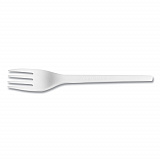
Plastic forks (often polypropylene or polystyrene depending on line) are common for durability and low cost. They are typically the best fit for high-volume takeout, cafeterias, and breakrooms where performance matters more than sustainability claims.
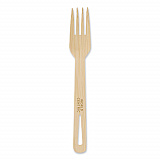
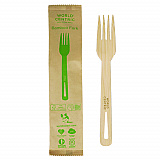
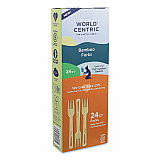
Compostable or plant-based forks are designed for buyers prioritizing sustainability goals or venue requirements. These can include CPLA-style bioplastics or molded fiber/wood alternatives depending on the product. Always confirm local acceptance rules before making compostability a purchasing requirement.
Strength and weight: light, medium, and heavy-duty
Fork strength is the biggest driver of satisfaction. Light and medium weights can work for salads, fruit, and soft sides. For proteins, dense pasta, or mixed bowls, heavy-duty forks reduce breakage and the need to double-up. If you are seeing high usage per ticket, upgrading strength can lower total cost by reducing waste and replacements.
Wrapped vs unwrapped: sanitation and speed
Individually wrapped forks support hygiene protocols and are ideal for healthcare, schools, delivery, and self-serve stations. Unwrapped forks are typically more cost-efficient and faster to stage for back-of-house and catering lines. Consider your handling process: if forks are pre-packed into bags, wrapped can reduce touchpoints; if forks are dispensed from a controlled bin, unwrapped may be sufficient.
Color and appearance: clear, white, black, and premium looks
Color impacts presentation and perceived quality. Black and premium-styled forks often pair well with upscale takeout and catering. White and clear are classic for general foodservice and institutional use. If you are standardizing across locations, selecting one color family can simplify purchasing and reduce SKU sprawl.
Operational considerations buyers care about
Case pack, storage, and freight efficiency
Forks are lightweight but bulky. Case quantities and carton dimensions affect storage and freight costs. For recurring programs, ordering full cases (or pallet quantities for multi-site) helps reduce per-unit shipping impact and keeps your supply room consistent. If you need help matching case packs to weekly volume, customer support can guide you to the most cost-effective configuration.
Compliance and labeling checks
If you purchase compostable forks for policy or venue requirements, verify the product claims and any certifications shown on the item page. Compostability is not universal across municipalities, and some facilities only accept specific materials. For wrapped forks, check whether the wrapper is paper or film if that matters to your waste stream.
Menu fit: what your fork needs to handle
Match fork selection to the toughest item on your menu. A fork that works for salad but fails on chicken bowls creates negative feedback fast. When in doubt, choose heavy-duty for mixed menus, or run a quick in-house test with your densest items and hottest holding conditions.
Build the right cutlery set for your service line
If you want a ready-to-go option for takeout and delivery, Cutlery Kits can reduce packing time and improve order accuracy. For full place settings, pair forks with Knives and Spoons to keep your inventory consistent across shifts and locations. If you serve bowls, salads, and mixed dishes and want a hybrid utensil, Sporks can be a practical alternative that reduces the number of items you stock.
Why buy forks here
Wholesale value without sacrificing selection
With 100+ SKUs, you can source budget-friendly everyday forks, heavy-duty options for demanding menus, and compostable alternatives for sustainability programs. Buying in bulk helps lower your per-unit cost and keeps you stocked through peak periods.
Fast fulfillment and knowledgeable support
When you are managing recurring demand, speed matters. Expect 1-2 day shipping on many items, plus support from a team that understands foodservice purchasing and can help you choose the right strength, wrap style, and case quantity.
Forks FAQ
Are compostable forks accepted everywhere?
No. Compostable claims depend on the material and local facility acceptance. Check your municipality or hauler requirements and confirm the product labeling and certifications shown on the item page before standardizing.
How many disposable forks come in a case?
Case pack varies by brand and fork type. Check the product page for the exact count and carton dimensions, then order by the case to improve per-unit cost and reduce reorder frequency.
Should I buy wrapped or unwrapped forks for my business?
Wrapped forks are best for hygiene-sensitive settings like healthcare, schools, delivery, and self-serve stations. Unwrapped forks are usually more cost-effective for back-of-house and catering lines where handling is controlled.
What is the best disposable fork for heavy foods like pasta or protein bowls?
Choose heavy-duty forks designed to resist bending and snapping. If your menu includes dense proteins or thick pasta, heavy-duty typically reduces waste and customer complaints versus light or medium weight.
Which fork material is most cost-effective for high-volume takeout?
Standard plastic forks are typically the lowest-cost option and perform well for most takeout use. If sustainability requirements apply, compare plant-based options based on strength, local acceptance, and total cost per served meal.