
Platform Trucks

Filters Clear All
Price
Batteries Included
Battery Type
Caster/Wheel Size
Color Family
Color(s)
Control Set Indicator
For Use With
Material(s)
Maximum Weight Capacity
Motor/Engine Type
Overall Dimensions
Safety/Security Feature Indicator

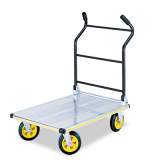
1-2 Day Delivery
$586.61 $1105.00
Choose Your Frequency:
Volume Pricing
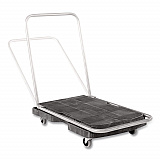
1-2 Day Delivery
$181.97 $330.67
Choose Your Frequency:
Volume Pricing
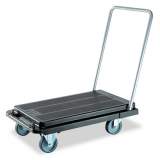
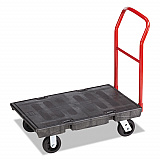
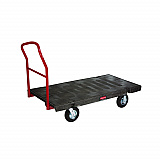
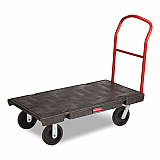
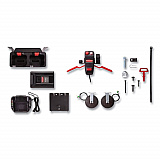
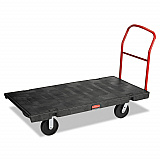
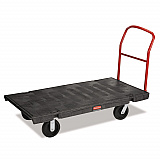
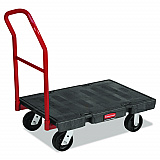
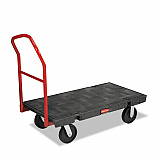
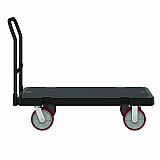
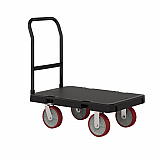
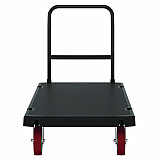
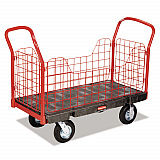
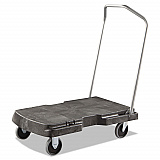
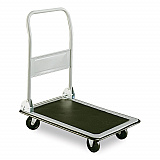
Commercial platform trucks built for daily hauling
Platform trucks are a go-to solution for moving cartons, supplies, and equipment across warehouses, schools, healthcare facilities, offices, and back-of-house operations. A stable deck and high-capacity casters help reduce handling time while improving load control on long corridors, ramps, and dock areas. With bulk pricing, 1-2 day shipping on many items, and a deep assortment, its easy to standardize your fleet across locations.
We stock trusted commercial lines from Rubbermaid Commercial, Safco, Suncast Commercial, and Deflecto, with options that balance capacity, maneuverability, and durability for recurring facility use.
How to choose the right platform truck
Load capacity and real-world safety margin
Start with the heaviest typical load, then add a buffer for peak days and uneven weight distribution. Higher capacity frames and reinforced decks help prevent flexing, caster failure, and premature wear. If your team routinely stacks product high, prioritize stability and wheel quality over the lowest rated capacity.
Deck size, material, and edge protection
Match deck dimensions to your standard cartons, totes, or equipment footprint to minimize overhang. Common deck materials include molded plastic for corrosion resistance and easy wipe-down, and steel for maximum rigidity. Textured decks and raised lips can improve grip and reduce sliding, especially when crossing thresholds or elevator gaps.
Handle style and ergonomics
Single-handle and dual-handle designs affect control in tight aisles. For long pushes, a comfortable handle height and secure grip reduce fatigue. If multiple operators use the same truck, choose a handle design that works for a range of heights and pushing angles.
Casters and wheels: the difference-maker
Wheel type should match your floor conditions. Soft tread wheels can reduce noise and protect finished floors, while harder wheels often roll easier under heavy loads on smooth concrete. Consider swivel vs. rigid caster configurations based on turning needs, and look for quality bearings if you expect frequent, long-distance runs.
Environment and compliance considerations
For wet areas or frequent washdowns, corrosion-resistant materials and non-marking wheels help maintain floors and equipment. In foodservice and healthcare, prioritize surfaces that clean quickly and resist staining. If you move loads on ramps or near dock plates, braking options and stable wheelbases can reduce incident risk.
Where platform trucks fit in your material handling setup
When a platform truck is the best tool
Use platform trucks for bulky, stable loads that benefit from a flat deck: case goods, paper products, packaged supplies, and equipment. They are especially effective for repeat routes like receiving to storage, storage to staging, and staging to point-of-use.
When to consider a different cart type
If you need vertical control and easier tipping leverage for tall stacks, a Hand Trucks setup may be a better fit. For low-profile moves and tight maneuvering under pallets or equipment, browse Dollies as an alternative. If your workflow requires organized shelving, bins, or multi-level picking, Utility Carts can reduce trips and improve item separation.
Buying in bulk: standardize, save, and simplify reorders
Facilities that purchase platform trucks in multiples typically see better consistency and lower total cost over time. Standardizing deck size and wheel type across departments simplifies training, reduces downtime from mismatched parts, and makes replacement ordering faster. If you are outfitting multiple sites or expanding a fleet, our support team can help align capacity, wheel specs, and use-case requirements so you get the right trucks on the first order.
What to expect from our assortment
Commercial-grade options across common use cases
Choose from platform trucks designed for everyday facility transport, including models focused on high capacity, easy-clean surfaces, and smooth rolling performance. With 100+ SKUs available, you can dial in the right balance of deck size, handle configuration, and caster type for your floor plan.
Fast fulfillment and price advantage
When downtime is not an option, fast delivery matters. Many platform trucks ship in 1-2 days, and bulk ordering helps lock in better value for recurring needs. If you are comparing similar specs, prioritize total cost factors like wheel wear, deck durability, and operator efficiency, not just the upfront price.
Platform Trucks FAQ
Are plastic or steel platform trucks better?
Plastic decks are corrosion-resistant and easy to clean, making them a strong choice for washdown or spill-prone areas. Steel decks typically provide maximum rigidity for heavy, frequent hauling and can handle more abuse in industrial settings.
Do you offer bulk pricing and fast shipping on platform trucks?
Yes. Bulk pricing is available to help reduce per-unit cost, and many platform trucks ship in 1-2 days. If you are outfitting multiple departments or locations, support can help standardize specs for easier reordering.
What capacity platform truck should I buy for commercial use?
Choose a rated capacity above your heaviest typical load and add a safety buffer for uneven weight, stacked loads, and peak days. Higher capacity frames and better casters usually last longer in daily use.
When should I choose a platform truck instead of a hand truck or dolly?
Use a platform truck for stable, bulky loads that sit flat on a deck and need controlled pushing over distance. Choose a hand truck for tall stacks that benefit from leverage, and a dolly for low-profile moves and tight maneuvering.
Which wheels are best for platform trucks on smooth floors vs. rough surfaces?
On smooth concrete or finished floors, harder wheels often roll easier under heavy loads, while softer tread wheels can reduce noise and protect floors. For rough surfaces, prioritize larger diameter wheels and durable tread for better obstacle handling.