
Low Density Trash Bags

Filters Clear All
Brands
Price
Application
Bottom Seal
Capacity (Weight)
Capacity Range (Volume) [Max]
Closure
Color Family
Color(s)
Flat Pack/Roll
Grade
Height
Material(s)
Maximum Volume Range
Scent Indicator
Thickness
Waste Bag Closure Type
Width









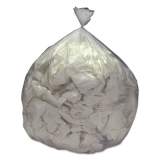
1-2 Day Delivery
$23.96 $45.82
Case of 100($0.24/Each)
Choose Your Frequency:
Volume Pricing
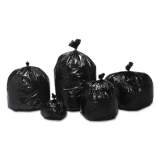
1-2 Day Delivery
$31.72 $59.62
Case of 250($0.13/Each)
Choose Your Frequency:
Volume Pricing
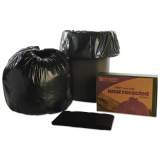
1-2 Day Delivery
$41.22 $75.32
Box of 100($0.41/Each)
Choose Your Frequency:
Volume Pricing
1-2 Day Delivery
$53.48 $91.93
1 Box($53.48/Each)
Choose Your Frequency:
Volume Pricing
1-2 Day Delivery
$57.70 $62.42
Box of 40($1.44/Each)
Choose Your Frequency:
Volume Pricing
1-2 Day Delivery
$51.88 $96.10
Box of 100($0.52/Each)
Choose Your Frequency:
Volume Pricing
1-2 Day Delivery
$44.66 $82.72
Case of 100($0.45/Each)
Choose Your Frequency:
Volume Pricing
1-2 Day Delivery
$46.75 $86.65
Case of 250($0.19/Each)
Choose Your Frequency:
Volume Pricing
1-2 Day Delivery
$41.15 $44.25
Box of 40($1.03/Each)
Choose Your Frequency:
Volume Pricing
1-2 Day Delivery
$34.02 $39.67
Box of 37($0.92/Each)
Choose Your Frequency:
Volume Pricing
1-2 Day Delivery
$35.10 $40.92
Box of 30($1.17/Each)
Choose Your Frequency:
Volume Pricing
1-2 Day Delivery
$10.52 $11.04
Box of 33($0.32/Each)
Choose Your Frequency:
Volume Pricing
1-2 Day Delivery
$42.19 $74.45
1 Box($42.19/Each)
Choose Your Frequency:
Volume Pricing
1-2 Day Delivery
$54.59 $94.68
Case of 100($0.55/Each)
Choose Your Frequency:
Volume Pricing
1-2 Day Delivery
$72.86 $110.68
Case of 100($0.73/Each)
Choose Your Frequency:
Volume Pricing
1-2 Day Delivery
$29.05 $57.72
Case of 50($0.58/Each)
Choose Your Frequency:
Volume Pricing
1-2 Day Delivery
$45.96 $81.54
Case of 50($0.92/Each)
Choose Your Frequency:
Volume Pricing
1-2 Day Delivery
$52.66 $97.08
Case of 50($1.05/Each)
Choose Your Frequency:
Volume Pricing
1-2 Day Delivery
$52.93 $101.93
Case of 50($1.06/Each)
Choose Your Frequency:
Volume Pricing
1-2 Day Delivery
$31.91 $54.43
Case of 25($1.28/Each)
Choose Your Frequency:
Volume Pricing
1-2 Day Delivery
$59.45 $85.85
Case of 250($0.24/Each)
Choose Your Frequency:
Volume Pricing
1-2 Day Delivery
$53.08 $85.85
Case of 250($0.21/Each)
Choose Your Frequency:
Volume Pricing
1-2 Day Delivery
$41.57 $69.90
Case of 200($0.21/Each)
Choose Your Frequency:
Volume Pricing
1-2 Day Delivery
$41.94 $69.90
Case of 200($0.21/Each)
Choose Your Frequency:
Volume Pricing
1-2 Day Delivery
$47.05 $75.05
Case of 150($0.31/Each)
Choose Your Frequency:
Volume Pricing
1-2 Day Delivery
$47.05 $75.05
Case of 150($0.31/Each)
Choose Your Frequency:
Volume Pricing
1-2 Day Delivery
$33.97 $60.15
Case of 100($0.34/Each)
Choose Your Frequency:
Volume Pricing
1-2 Day Delivery
$50.00 $60.15
Case of 100($0.50/Each)
Choose Your Frequency:
Volume Pricing
1-2 Day Delivery
$88.72 $140.63
Case of 200($0.44/Each)
Choose Your Frequency:
Volume Pricing
1-2 Day Delivery
$88.72 $140.63
Case of 200($0.44/Each)
Choose Your Frequency:
Volume Pricing
1-2 Day Delivery
$88.72 $140.63
Case of 200($0.44/Each)
Choose Your Frequency:
Volume Pricing
1-2 Day Delivery
$110.98 $200.58
Case of 200($0.55/Each)
Choose Your Frequency:
Volume Pricing
1-2 Day Delivery
$42.19 $71.53
Box of 80($0.53/Each)
Choose Your Frequency:
Volume Pricing
1-2 Day Delivery
$42.05 $72.27
Box of 65($0.65/Each)
Choose Your Frequency:
Volume Pricing
1-2 Day Delivery
$48.05 $73.02
Box of 65($0.74/Each)
Choose Your Frequency:
Volume Pricing
1-2 Day Delivery
$48.78 $67.38
Case of 250($0.20/Each)
Choose Your Frequency:
Volume Pricing
Low Density Trash Bags for Tough, Puncture-Resistant Waste
Low density trash bags, also called LDPE liners, are a go-to choice when you need strength over ultra-thin economy film. LDPE has more stretch and tear resistance than many standard liners, making it a better fit for heavier trash, irregular shapes, and sharper contents. If your team is tired of split bags, leaks, and double-bagging, moving to low density is often the simplest fix.
Stocking the right liner reduces labor, prevents mess, and improves compliance in back-of-house areas. With 100+ SKUs, bulk case pricing, and 1-2 day shipping, its easy to standardize across locations and keep reorders consistent.
What makes LDPE different
LDPE film is engineered to stretch before it tears. That elasticity helps the bag handle jagged waste (cardboard corners, broken packaging, food prep debris) and heavier loads without failing at the seams. In practical terms, low density bags typically feel softer and more flexible than high density options, while still delivering strong puncture resistance.
For applications where weight and sharp edges matter more than pure cost-per-bag, LDPE is usually the better value because it reduces blowouts and the need to use two liners.
How to choose the right low density trash bag
1) Match bag size to your can. Start with the container size (gallons) and rim dimensions. A bag that is too small will slip, tear, or fail to tie. A bag that is too large wastes material and can drag on the floor. If you are standardizing across multiple sites, confirm the actual can measurements, not just the labeled gallon size.
2) Select the right thickness (gauge or mil). Thicker is not always better, but it is safer for sharp or heavy waste. Use lighter gauges for general office and restroom waste, and step up thickness for warehouse, industrial, or foodservice back-of-house trash. If you are unsure, tell support what you are throwing away (weight, sharpness, moisture) and your can size, and we can recommend a starting point that avoids overbuying.
3) Choose the seal style. Star seal bottoms help distribute weight and reduce leaks, while flat seals can be a fit for certain can styles and lighter loads. For wet waste, prioritize seals designed to reduce seepage and failures at the bottom.
4) Consider color and opacity. Black liners help conceal contents for front-of-house or public areas. Clear liners support visibility for security or sorting programs. Color-coding can also support waste stream separation.
Where low density trash bags perform best
LDPE liners are commonly used in:
- Restaurants and foodservice back-of-house (heavier, wetter waste)
- Healthcare and clinics (facility waste where reliability matters)
- Schools and campuses (high volume, mixed waste)
- Offices and commercial buildings (janitorial standardization across floors)
- Warehouses and light industrial (packaging debris, sharp edges)
If you need easy closure for fast liner changes in public areas, consider Drawstring Trash Bags as an alternative that can reduce tie time and improve consistency for staff.
LDPE vs other liner types
Low density vs high density: LDPE generally offers better puncture resistance and stretch, while HDPE can be more cost-efficient for light, non-sharp waste. If your waste is mostly paper and light restroom trash, High Density Trash Bags may be a better fit for budget-driven programs.
LDPE vs recycled-content options: If recycled content is a purchasing requirement, you may also want to compare performance and price against Repro Trash Bags, especially for high-volume facilities balancing sustainability targets with liner reliability.
Bulk ordering and cost control for procurement
Trash liners are a recurring purchase, so small spec changes can have a big impact on annual spend. The goal is to buy the lowest-cost bag that still prevents failures. Bulk case ordering helps lock in pricing, reduce emergency runs, and keep every location on the same spec.
To streamline purchasing, standardize on a short list by can size and use case (restroom, office, back-of-house). Then set reorder points based on cases per week. If freight costs are a concern, consolidating multiple cases per shipment typically improves landed cost.
Brands and assortment you can rely on
We stock a wide range of low density trash bags from trusted commercial brands including Heritage, Boardwalk, Inteplast Group, Accufit, AbilityOne, Earthsense, Stout by Envision, Trinity Plastics, Pitt Plastics, and Classic. That breadth makes it easier to match an existing spec, qualify an alternate, or upgrade performance without changing your entire program.
Fast fulfillment and support
When liners run out, operations slow down. Our 1-2 day shipping on many items helps prevent downtime, and our support team can help you confirm size, thickness, and seal style before you commit to a full pallet or multi-case order. If you are replacing a current bag, share the dimensions and gauge/mil (or a photo of the box label) for a faster match.
Low Density Trash Bags FAQ
Are low density trash bags stronger than high density bags?
In most real-world use, LDPE is more puncture-resistant and stretches more before tearing, making it better for irregular or sharp contents. HDPE can be more cost-effective for light, non-sharp waste.
Can I buy low density trash bags in bulk for multiple locations?
Yes. Bulk case ordering helps standardize specs across sites, reduce stockouts, and lower per-bag cost. Consolidated shipments can also improve landed freight cost.
How do I choose the right thickness for LDPE trash bags?
Match thickness to the waste type: lighter gauges for general dry trash, thicker gauges for heavy, wet, or sharp waste. If you share your can size and typical contents, support can recommend a spec that avoids blowouts without overspending.
What are low density trash bags used for?
Low density (LDPE) trash bags are used for heavier or sharper waste where puncture resistance and stretch matter, such as back-of-house foodservice, warehouses, and high-traffic facilities.
What size trash bag do I need for my trash can?
Use the cans rim dimensions and height to select the correct width and length. A properly sized bag should fold over the rim and still have enough length to tie or secure without tearing.