
Dusters

Filters Clear All
Brands
Price
Bristle Color
Bristle Length
Bristle Material
For Use With
Handle Color
Handle Length
Handle Material
Handle Material(s)
Length
Material(s)
Maximum Handle Length
Type
Width



1-2 Day Delivery
$14.04 $31.01
Choose Your Frequency:
Volume Pricing
1-2 Day Delivery
$8.74 $18.74
Choose Your Frequency:
Volume Pricing
1-2 Day Delivery
$11.28 $20.68
Box of 10($1.13/Each)
Choose Your Frequency:
Volume Pricing
1-2 Day Delivery
$11.28 $20.67
Box of 10($1.13/Each)
Choose Your Frequency:
Volume Pricing
1-2 Day Delivery
$43.22 $82.68
Case of 40($1.08/Each)
Choose Your Frequency:
Volume Pricing
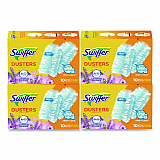
1-2 Day Delivery
$40.68 $82.72
Case of 40($1.02/Each)
Choose Your Frequency:
Volume Pricing
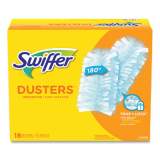
1-2 Day Delivery
$17.26 $29.77
Box of 18($0.96/Each)
Choose Your Frequency:
Volume Pricing
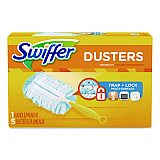
1-2 Day Delivery
$6.34 $11.85
Choose Your Frequency:
Volume Pricing
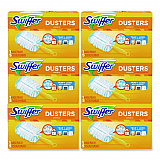
1-2 Day Delivery
$37.22 $71.10
Case of 6($6.20/Each)
Choose Your Frequency:
Volume Pricing
1-2 Day Delivery
$87.92 $158.31
Case of 2($43.96/Roll)
Choose Your Frequency:
Volume Pricing
1-2 Day Delivery
$12.76 $27.32
1 Box($12.76/Roll)
Choose Your Frequency:
Volume Pricing
1-2 Day Delivery
$65.96 $119.83
($65.96/Each)
Choose Your Frequency:
Volume Pricing
1-2 Day Delivery
$11.21 $20.79
Box of 6($1.87/Each)
Choose Your Frequency:
Volume Pricing
1-2 Day Delivery
$45.00 $83.16
Case of 24($1.88/Each)
Choose Your Frequency:
Volume Pricing
1-2 Day Delivery
$26.02 $44.85
($26.02/Kit)
Choose Your Frequency:
Volume Pricing
1-2 Day Delivery
$13.60 $22.79
Choose Your Frequency:
Volume Pricing
1-2 Day Delivery
$68.90 $136.74
Case of 6($11.48/Kit)
Choose Your Frequency:
Volume Pricing
1-2 Day Delivery
$56.29 $90.27
Choose Your Frequency:
Volume Pricing
1-2 Day Delivery
$180.62 This item is listed at the minimum advertised price.
Choose Your Frequency:
Volume Pricing
1-2 Day Delivery
$42.94 $79.28
Choose Your Frequency:
Volume Pricing
1-2 Day Delivery
$36.59 $65.60
Choose Your Frequency:
Volume Pricing
1-2 Day Delivery
$12.41 $27.79
Choose Your Frequency:
Volume Pricing
1-2 Day Delivery
$75.06 Great news! The price of this item drops at checkout, but we can't show it here due to manufacturer restrictions. Add it to your cart to see your exclusive deal!
Choose Your Frequency:
Volume Pricing
1-2 Day Delivery
$34.46 This item is listed at the minimum advertised price.
Choose Your Frequency:
Volume Pricing
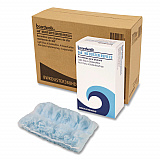
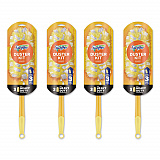
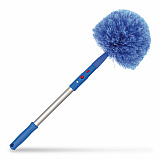
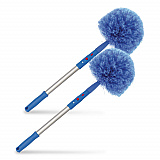
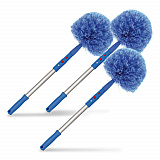
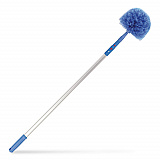
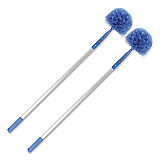
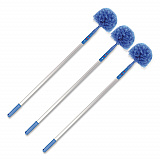



Dusters for commercial cleaning and daily maintenance
Dusters are a fast, low-disruption way to remove dust from vents, blinds, shelves, equipment, and hard-to-reach corners. For facilities that clean on a schedule, the right duster reduces labor time, improves results, and helps maintain a professional appearance between deep cleans. This category is built for recurring purchasing: dependable options, bulk-friendly quantities, and fast shipping when you are restocking.
Choose from trusted brands such as Swiffer, Boardwalk, Unger, O-Cedar, 3M, Rubbermaid, Rubbermaid Commercial, OXO, AbilityOne, and HOSPECO. If you are standardizing supplies across locations, consistent SKUs make training and replenishment easier.
How to choose the right duster
Disposable vs reusable dusters
Disposable dusters are ideal for high-traffic areas and quick touch-ups. They minimize cross-contamination risk because you replace the head after use, and they are easy to issue to staff. They are also a good fit when you need predictable performance without laundering.
Reusable dusters are typically washable and designed for longer service life. They can lower cost per use in routine programs, especially when you have an established process for cleaning and drying tools. For procurement teams, reusable options can support waste-reduction goals while still delivering consistent dust pickup.
Material and dust capture performance
Microfiber and electrostatic-style fibers are common because they attract and hold fine dust rather than just pushing it around. For textured surfaces, look for fibers that can conform to grooves and edges. For sensitive areas (electronics, displays, finished wood), prioritize non-scratching materials and avoid overly stiff bristles.
Head shape and reach
Flat or paddle-style heads work well on shelves and wide surfaces. Flexible or contoured heads help around fixtures, vents, and irregular shapes. If you are cleaning overhead corners, ceiling fans, or tall shelving, pairing dusters with the right reach tool matters as much as the head itself.
Where dusters fit in your cleaning program
Facilities and use cases
Dusters are commonly used in offices, schools, restaurants, healthcare waiting areas, and retail spaces where appearance and air quality perception matter. They are also useful in back-of-house areas for routine dusting of ledges, equipment exteriors, and storage racks.
For floor-level debris, dusters are not a replacement for sweeping or mopping. They are best used as a quick step before wet cleaning, helping reduce the amount of soil that ends up in mop water or on pads.
Compliance and safety considerations
In foodservice and healthcare-adjacent environments, reduce the chance of spreading dust by using a duster that captures particles effectively and by changing heads when they become loaded. Color-coding and dedicated tools by area can support internal hygiene policies. If you need help matching tools to your facility rules, customer support can guide selection based on surface type and workflow.
Bulk buying and operational value
Stocking dusters in bulk helps prevent missed tasks and last-minute rush orders. Facilities teams often standardize on a few core SKUs: a general-purpose duster for daily routes, a higher-reach option for periodic overhead work, and refills sized to match usage rates.
To reduce freight and downtime, consolidate replenishment with other janitorial essentials and keep a small buffer of refills on hand. With low pricing and 1-2 day shipping options, it is easier to maintain par levels across multiple closets or locations.
Related tools that pair well with dusters
If you are also handling floor debris, add Brooms and Dust Pans to build a complete dry-cleaning setup for entryways and back rooms. For detailed surface work, Cleaning Cloths & Wipes can complement dusters on desks, counters, and touchpoints where you want a tighter wipe-down.
Need extra reach for high vents, rafters, and tall shelving? Pair your duster with Extension Poles & Handles to improve coverage while keeping staff safely on the ground.
Why buy dusters here
Selection, speed, and support
With over 100 SKUs, you can match the right duster to the job instead of forcing a one-size-fits-all tool. Low prices support bulk ordering, and fast shipping helps you stay in stock. If you are comparing options for standardization, our knowledgeable support team can help you choose based on surface type, frequency, and refill strategy.
Dusters FAQ
Do dusters actually capture dust or just move it around?
High-quality microfiber or electrostatic-style dusters are designed to attract and hold fine particles. For best results, replace or clean the head when it becomes loaded and avoid over-dusting the same area with a saturated head.
How many duster refills should I keep in stock for a facility?
A practical approach is to stock refills based on your cleaning frequency and number of routes, then keep a small buffer to avoid stockouts. Bulk purchasing typically lowers unit cost and reduces emergency orders.
What should I buy for hard-to-reach areas like vents and high shelves?
Choose a flexible or contoured duster head for vents and corners, and pair it with an extension pole when needed. This improves coverage and helps staff work safely without climbing.
Which duster is best for commercial use: disposable or reusable?
Disposable dusters are best for quick, high-volume touch-ups and reducing cross-contamination by replacing heads after use. Reusable dusters are best when you have a process to wash and dry tools and want lower cost per use over time.