
Utility Carts

Filters Clear All
Brands
Price
Bin Quantity
Capacity (Weight)
Caster/Glide/Wheel
Caster/Wheel Indicator
Caster/Wheel Size
Color
Color Family
Color(s)
Door Quantity
Drawer Quantity
For Use With
Height (Max)
Height Maximum
Lock
Material(s)
Maximum Weight Capacity
Number of Drawers
Number of Shelves
Number of Wheels
Overall Depth
Overall Material Type
Overall Width
Shelf Count
Shelf Type
Shelf Type(s)
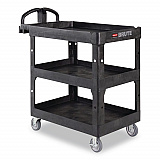
1-2 Day Delivery
$282.11 $614.16
Choose Your Frequency:
Volume Pricing Price/Pack
-
2 - 5$275.06
-
6 - 10$263.30
-
11+$258.60
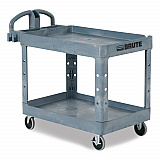
1-2 Day Delivery
$279.83 $446.61
Choose Your Frequency:
Volume Pricing Price/Pack
-
2 - 5$272.83
-
6 - 10$261.17
-
11+$256.51
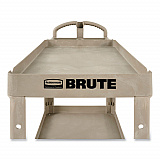
1-2 Day Delivery
$236.16 $475.15
Choose Your Frequency:
Volume Pricing Price/Pack
-
2 - 6$230.26
-
7+$220.42
1-2 Day Delivery
$229.69 $475.46
Choose Your Frequency:
Volume Pricing Price/Pack
-
2 - 6$223.95
-
7 - 13$214.38
-
14+$210.55
1-2 Day Delivery
$262.37 $581.32
Choose Your Frequency:
Volume Pricing Price/Pack
-
2 - 6$255.81
-
7 - 11$244.88
-
12+$240.50
1-2 Day Delivery
$256.55 $538.74
Choose Your Frequency:
Volume Pricing
1-2 Day Delivery
$233.33 $530.02
Choose Your Frequency:
Volume Pricing Price/Pack
-
2 - 6$227.49
-
7+$217.77
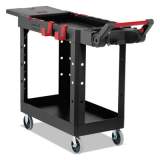
Scheduled Freight Delivery
$311.62 $495.65
Choose Your Frequency:
Volume Pricing Price/Pack
-
2 - 5$303.83
-
6 - 9$290.84
-
10+$285.65
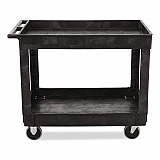
1-2 Day Delivery
$244.80 $552.14
Choose Your Frequency:
Volume Pricing Price/Pack
-
2 - 6$238.68
-
7 - 12$228.48
-
13+$224.40
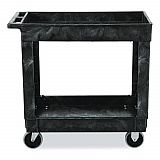
1-2 Day Delivery
$198.58 $496.91
Choose Your Frequency:
Volume Pricing Price/Pack
-
2 - 7$193.61
-
8 - 15$185.34
-
16+$182.03
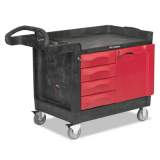
Scheduled Freight Delivery
$989.53 $1530.46
Choose Your Frequency:
Volume Pricing Price/Pack
-
2 - 3$964.79
-
4+$907.07
Scheduled Freight Delivery
$745.42 $1280.00
Choose Your Frequency:
Volume Pricing Price/Pack
-
2 - 3$726.78
-
4 - 4$695.72
-
5+$683.30
1-2 Day Delivery
$193.96 $364.00
Choose Your Frequency:
Volume Pricing Price/Pack
-
2+$189.11
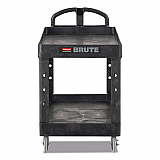
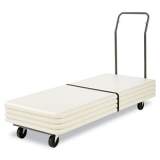
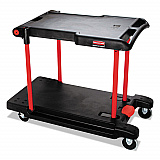
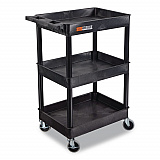
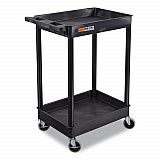
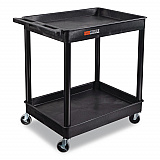
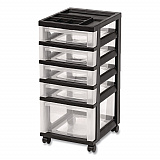
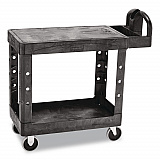
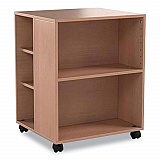
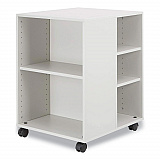
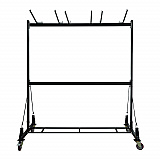
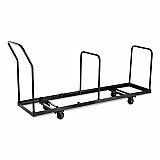
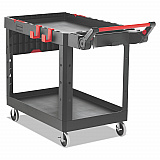
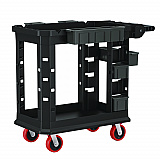
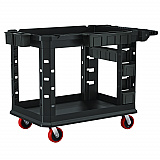
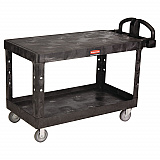
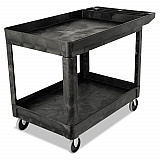
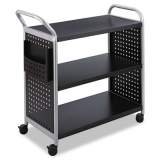
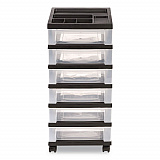
Utility carts for fast, organized transport
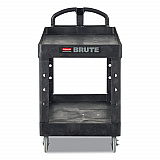
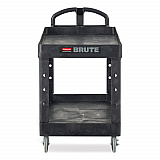
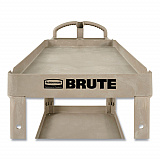
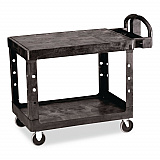
Utility carts reduce trips, prevent back-and-forth, and keep tools and supplies staged where work happens. This category focuses on commercial-grade rolling carts used across janitorial, facilities, offices, schools, healthcare, and light warehouse tasks. With 100+ SKUs and brands like Rubbermaid Commercial, Luxor, Safco, Iris, AdirOffice, Alera, Suncast Commercial, Boardwalk, Durable, and NPS, you can standardize carts across sites and simplify reordering.
For procurement teams, the goal is simple: pick the right capacity, shelf layout, and material so the cart lasts and stays compliant with your environment. If you are building a fleet, bulk ordering helps keep wheel types, shelf spacing, and accessory fit consistent across departments.
How to choose the right utility cart
Capacity, shelf count, and load distribution
Start with what you are moving and how often. Two-shelf carts are common for quick runs and staging. Three-shelf carts add separation for clean vs. dirty items or small parts. Check per-shelf and total capacity, then consider how weight will be distributed during use. A cart that is overloaded on the top shelf becomes harder to steer and more likely to tip on thresholds.
Material selection: plastic vs. metal
Plastic utility carts are popular for wet areas and routine wipe-downs. They resist corrosion and are typically quieter in hallways. Metal carts can be a better fit for higher heat exposure, sharper tools, or heavier loads, depending on the model and finish. In healthcare and food-adjacent areas, prioritize surfaces that clean quickly and do not trap debris at joints.
Wheel type, maneuverability, and floor protection
Casters determine how the cart feels in real life. Larger wheels roll over grout lines and thresholds more easily. Non-marking casters help protect finished floors. If carts will be parked on ramps or sloped docks, consider models with locking casters or brake options to reduce roll-away risk.
Handle design and workflow fit
Ergonomic push handles, rounded corners, and shelf lips can reduce product loss and hand injuries during tight turns. If your team frequently moves long items, look for open-side designs or carts with configurable shelves. For high-traffic corridors, compact footprints help reduce collisions and keep aisles clear.
Common commercial use cases
Janitorial and facilities
Utility carts are ideal for moving liners, paper goods, cleaning tools, and restock items between closets and service areas. If you need a purpose-built setup with bag holders, caddies, and covered storage, step up to Janitorial & Housekeeping Carts for more task-specific configurations.
Offices, schools, and mailrooms
Use rolling carts for copy paper, classroom supplies, IT peripherals, and event setup. When the job is primarily moving boxed items from receiving to storage, Dollies can be faster for short, heavy loads, while Hand Trucks are a better fit for stacked cartons and stair transitions.
Warehousing, receiving, and back-of-house
For larger, pallet-like moves or longer runs, consider Platform Trucks to increase deck space and reduce trips. If you are handling bulk waste, linens, or scrap, Tilt Trucks and Utility & Cube Trucks provide higher volume and easier dumping than a standard shelf cart.
Specs that matter for repeat purchasing
Dimensions and clearance
Measure door widths, elevator clearances, and storage closet depth before standardizing. A cart that fits the hallway but not the supply room creates daily friction. If carts will be nested or stored in rows, confirm overall length including handles.
Noise control and appearance
In healthcare, education, and office environments, quieter rolling and clean aesthetics matter. Look for smooth-rolling casters and easy-to-wipe surfaces. For customer-facing areas, uniform cart selection across locations helps maintain a consistent look.
Accessories and replacement planning
Accessories can extend cart life and improve workflow, especially when you are standardizing across multiple sites. Add-ons like extra bins, hooks, or replacement casters help keep carts in service rather than sidelined. For upgrades and maintenance parts, use Cart Accessories to match compatible components and reduce downtime.
Ordering guidance for teams and multi-site facilities
If you are buying for multiple departments, standardize on a small set of cart types (for example: light-duty restock, heavier-duty receiving, and a compact hallway cart). This simplifies training, reduces spare-part variety, and makes reorders faster. With low pricing, 1-2 day shipping on many items, and knowledgeable support, you can spec once and scale the same solution across locations.
For large orders, confirm delivery requirements such as liftgate needs, dock access, and inside delivery expectations to avoid freight surprises. If you are unsure which cart fits your load and environment, share your use case, aisle widths, and typical weight range and we will help narrow the options.
Utility Carts FAQ
Are plastic utility carts better than metal for janitorial use?
Often yes for wet environments because plastic resists corrosion and wipes down easily. Metal can be a better fit for heavier loads or harsher impacts, depending on the model and finish.
Do you offer bulk pricing for utility carts?
Yes. Bulk orders help standardize equipment across departments and can reduce per-unit cost. Contact support with quantities and delivery details for the best order setup.
How do I know if a utility cart will fit through doors and elevators?
Measure the narrowest doorway and elevator opening on the route, then compare to the cart's overall width and length including handles. Also confirm turning clearance in tight corridors and storage rooms.
What caster features matter most for facility carts?
Wheel diameter, non-marking tread, and locking brakes are key. Larger wheels handle thresholds better, non-marking helps protect floors, and brakes reduce roll-away on ramps or sloped areas.
What weight capacity should I choose for a commercial utility cart?
Choose based on your heaviest typical load plus a safety margin. Check both total capacity and per-shelf rating, and avoid concentrating weight on the top shelf to reduce tip risk.